
Crack Cocaine’s Impact on Libido and Sexual Behavior
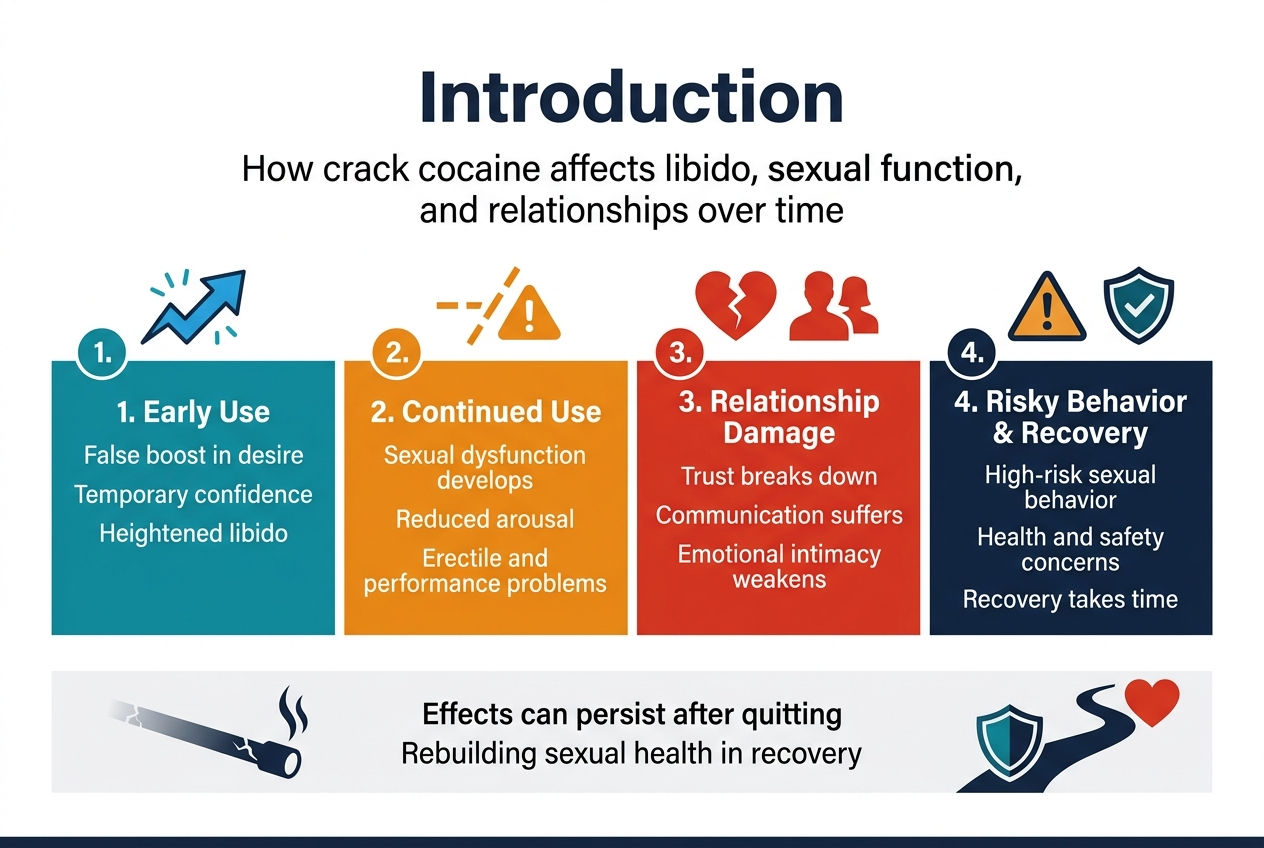
Crack cocaine wreaks havoc on sexual health and intimate relationships in ways many people don’t fully understand. This guide is for individuals struggling with crack addiction, their partners, healthcare providers, and anyone seeking to understand how crack cocaine effects on libido and sexual dysfunction develop over time.
While crack initially seems to boost sexual desire and confidence, long-term use leads to serious cocaine induced sexual dysfunction that can persist even after getting clean. The drug’s impact goes beyond physical performance problems – it damages trust, communication, and emotional intimacy in relationships.
We’ll explore how crack cocaine creates false sexual enhancement in early use, then progressively destroys normal sexual function with continued abuse. You’ll also learn about the dangerous high-risk behaviors that often accompany crack addiction and the specific challenges people face when trying to rebuild their sexual health during recovery.
Understanding Crack Cocaine’s Chemical Effects on the Brain
How crack cocaine alters dopamine pathways
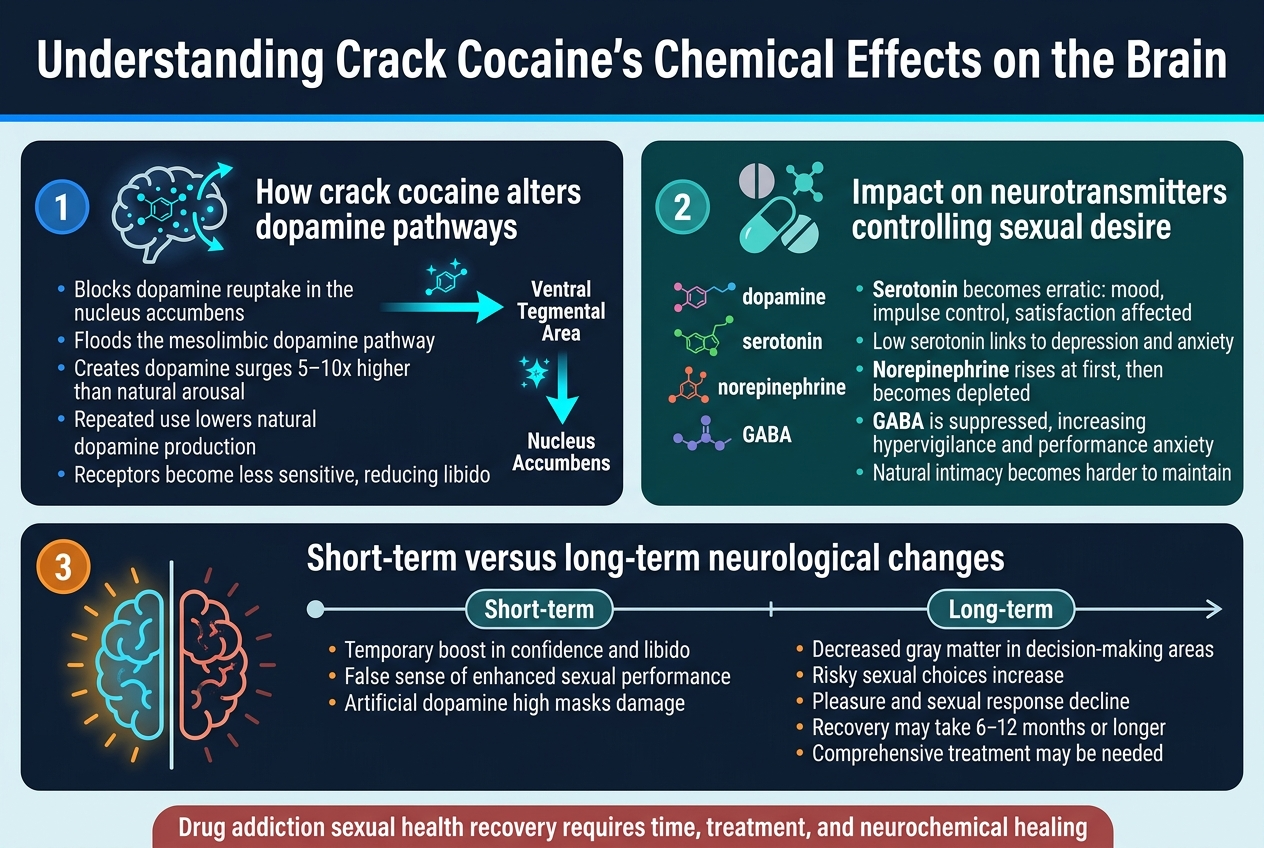
Crack cocaine hijacks the brain’s reward system by flooding dopamine pathways with artificial stimulation. When someone smokes crack, the drug blocks dopamine reuptake in the nucleus accumbens, creating an intense surge of this “feel-good” neurotransmitter. This massive dopamine release is what creates the euphoric high, but it also tricks the brain into associating sexual arousal and pleasure with drug use.
The drug specifically targets the mesolimbic dopamine pathway, which connects the ventral tegmental area to the nucleus accumbens. This pathway naturally regulates motivation, pleasure, and reward-seeking behaviors, including sexual desire. Crack cocaine essentially commandeers this system, creating artificial peaks of dopamine that are 5-10 times higher than natural sexual arousal produces.
Over time, these repeated dopamine surges cause the brain to reduce its natural dopamine production. The receptors become less sensitive, requiring more of the drug to achieve the same effect. This process directly impacts crack cocaine effects on libido because the same receptors that respond to sexual stimuli become damaged and less responsive.
Impact on neurotransmitters controlling sexual desire
Beyond dopamine, crack cocaine disrupts multiple neurotransmitter systems that regulate sexual function. Serotonin levels become erratic, affecting mood, impulse control, and sexual satisfaction. Low serotonin often leads to depression and anxiety, which significantly impacts intimate relationships and sexual performance.
Norepinephrine, another key neurotransmitter for sexual arousal, also becomes imbalanced. While crack initially increases norepinephrine release, creating heightened arousal and energy, chronic use depletes these stores. This depletion contributes to cocaine induced sexual dysfunction as the body struggles to maintain normal sexual responses without chemical stimulation.
GABA, the brain’s primary inhibitory neurotransmitter, gets suppressed during crack use. This disruption affects the ability to relax and be present during intimate moments, often leading to performance anxiety and relationship strain. The brain becomes stuck in a hypervigilant state, making natural sexual connection increasingly difficult.
Short-term versus long-term neurological changes
Initial crack use often creates a false sense of enhanced sexual performance and confidence. The dopamine flood can increase libido temporarily, making users feel more sexually adventurous and confident. This short-term effect masks the underlying damage occurring in the brain’s reward circuits.
Within weeks of regular use, the brain begins showing structural changes. Neuroimaging studies reveal decreased gray matter in areas responsible for decision-making and impulse control. These changes directly affect sexual behavior, often leading to risky sexual choices and an inability to form meaningful intimate connections.
Long-term neurological damage from crack cocaine can persist for months or even years after stopping use. The brain’s natural ability to experience pleasure, including sexual pleasure, becomes severely compromised. Recovery of normal drug addiction sexual health requires extensive time and often professional treatment to help restore healthy neurochemical balance.
Recovery timelines vary significantly between individuals, but studies show that some dopamine receptor function may take 6-12 months to partially recover. Complete restoration of healthy sexual function often requires comprehensive treatment addressing both the addiction and the underlying neurological damage.
Initial Sexual Enhancement and False Confidence
Why Users Experience Heightened Arousal Initially
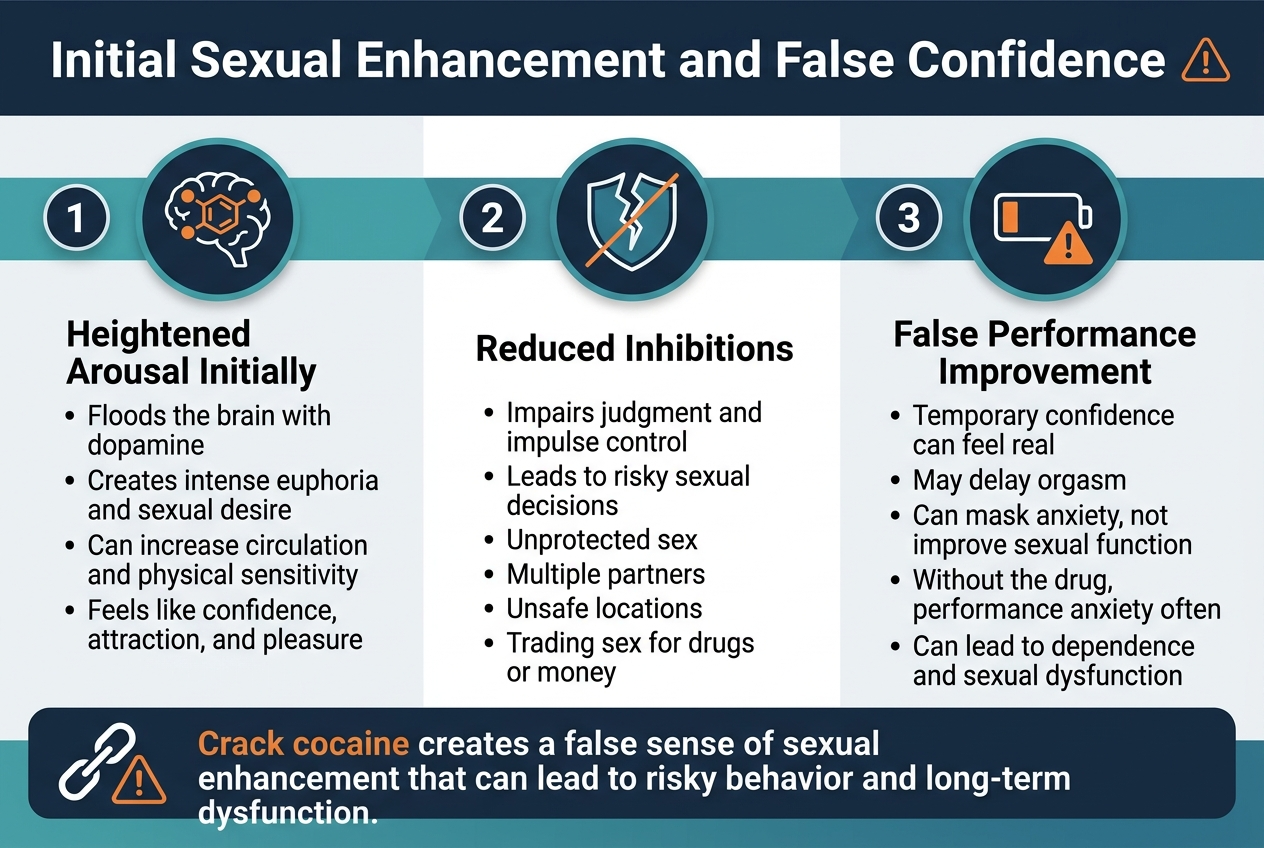
Crack cocaine dramatically floods the brain’s reward system with dopamine, creating intense euphoria that often includes a surge in sexual desire. This powerful stimulant directly affects the brain’s pleasure centers, making everything feel more intense and rewarding – including sexual sensations. Users frequently report feeling sexually charged and confident during their initial experiences with the drug.
The dopamine rush tricks the brain into believing that sexual experiences will be more pleasurable and satisfying. This biochemical manipulation creates a false association between crack use and enhanced sexuality. Many people find themselves craving not just the drug itself, but the sexual feelings they believe come with it. The crack cocaine effects on libido during early use can feel overwhelmingly positive, leading users to mistakenly think the drug improves their sex life.
Blood flow changes also play a role in this initial phase. The stimulant properties can temporarily increase circulation and heighten physical sensitivity, creating what feels like genuine sexual enhancement. Users often describe feeling more attractive, desirable, and sexually capable during these early experiences.
Reduced Inhibitions Leading to Risky Sexual Behaviors
The euphoric high from crack cocaine strips away normal social and personal boundaries, creating dangerous situations for users. People who would typically be cautious about sexual partners or practices find themselves making impulsive decisions they wouldn’t consider while sober. This dramatic shift in judgment stems from the drug’s impact on the prefrontal cortex, the brain region responsible for decision-making and impulse control.
Users commonly engage in sexual activities with strangers, skip protection, or participate in acts they later regret. The drug creates a false sense of invincibility and removes the natural caution that normally protects people from harmful situations. Many users report having multiple sexual partners during binges, often without remembering all the encounters clearly.
The combination of heightened arousal and lowered inhibitions creates a perfect storm for dangerous sexual behavior. Crack cocaine sexual behavior often includes:
-
Unprotected sex with multiple partners
-
Sexual encounters in unsafe locations
-
Trading sex for drugs or money
-
Engaging in extreme sexual practices
-
Having sex with people who might be violent or exploitative
False Sense of Sexual Performance Improvement
Crack cocaine creates a powerful illusion of enhanced sexual performance that keeps many users hooked on the drug. The stimulant effects can temporarily mask performance anxiety and make users feel more confident in bed. This false confidence feels incredibly real in the moment, leading people to believe their sexual abilities have genuinely improved.
The drug can delay orgasm in some users, creating the impression of better stamina and control. However, this isn’t true sexual enhancement – it’s a neurochemical disruption that interferes with normal sexual response. Many users mistake this altered response for improved performance, not realizing they’re experiencing early signs of sexual dysfunction.
The psychological boost from reduced anxiety and increased confidence can temporarily improve sexual experiences. Users feel more adventurous, attractive, and sexually capable than usual. This creates powerful positive associations with drug use that become harder to break as addiction develops.
Reality crashes down hard when users try to have sex without the drug. Performance anxiety returns with a vengeance, often worse than before. Many discover they can’t enjoy sex or perform sexually without crack, creating a cycle where drug use becomes necessary for any sexual activity. This dependence on substances for sexual function represents the beginning of serious cocaine induced sexual dysfunction that only worsens with continued use.
Progressive Sexual Dysfunction with Continued Use
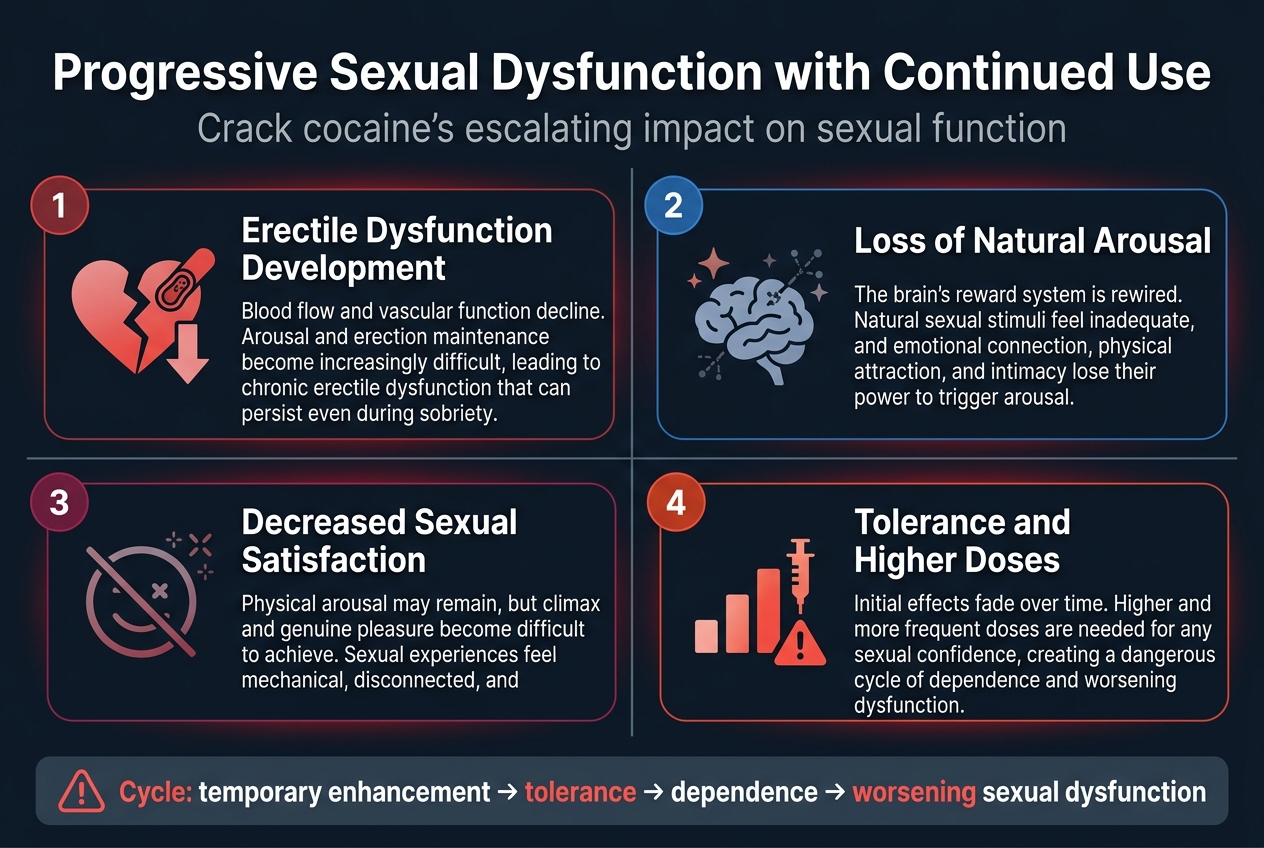
Erectile Dysfunction Development in Male Users
Crack cocaine’s impact on sexual performance becomes particularly devastating for men as addiction progresses. What starts as perceived sexual enhancement quickly transforms into chronic erectile dysfunction that can persist even during periods of sobriety. The drug’s interference with blood flow and vascular function creates a cascade of physiological problems that make normal sexual response increasingly difficult.
The neurochemical disruption caused by crack cocaine directly affects the pathways responsible for arousal and erection maintenance. Dopamine receptors become damaged and less responsive, while the cardiovascular system struggles to deliver adequate blood flow to sexual organs. Men often find themselves trapped in a cycle where they need the drug to feel sexually confident, yet the same substance systematically destroys their ability to perform sexually.
Loss of Natural Arousal Mechanisms
Regular crack cocaine use rewires the brain’s natural reward system, making normal sexual stimuli feel inadequate or uninteresting. The intense dopamine surge from the drug creates such an artificial high that natural sexual arousal mechanisms pale in comparison. Users report feeling disconnected from their bodies and unable to respond to physical touch or emotional intimacy without chemical enhancement.
This dysfunction extends beyond physical responses to include psychological arousal patterns. The brain becomes conditioned to associate sexual desire exclusively with drug use, creating a dependency that goes far beyond simple physical addiction. Natural triggers for sexual interest – emotional connection, physical attraction, romantic settings – lose their power to generate genuine arousal.
Decreased Ability to Achieve Sexual Satisfaction
Cocaine induced sexual dysfunction manifests as an inability to reach climax or experience genuine sexual pleasure, even when physical arousal is present. The drug’s impact on nerve sensitivity and brain chemistry creates a frustrating disconnect between physical sensation and sexual satisfaction. Users describe feeling physically present but emotionally and sensually absent during intimate encounters.
This anhedonia – the inability to feel pleasure – becomes one of the most distressing aspects of sustained crack cocaine use. Sexual experiences that once provided joy, connection, and release become mechanical and unsatisfying. The psychological toll of this loss often drives users deeper into addiction as they chase the memory of sexual satisfaction that becomes increasingly elusive.
Tolerance Building Requiring Higher Doses for Effects
The temporary sexual enhancement that initially attracts users to crack cocaine quickly diminishes as tolerance develops. What once required a small amount of the drug to feel sexually confident and energetic soon demands larger and more frequent doses. This escalation creates a dangerous cycle where sexual function becomes entirely dependent on increasing amounts of a substance that simultaneously destroys sexual health.
Users find themselves caught between two impossible choices: using higher doses of crack cocaine to maintain any semblance of sexual function, or facing complete sexual dysfunction during periods of abstinence. The physical and psychological dependence on the drug for any sexual response creates additional barriers to recovery and treatment seeking.
Psychological Impact on Intimate Relationships
Paranoia and Trust Issues Affecting Partnerships
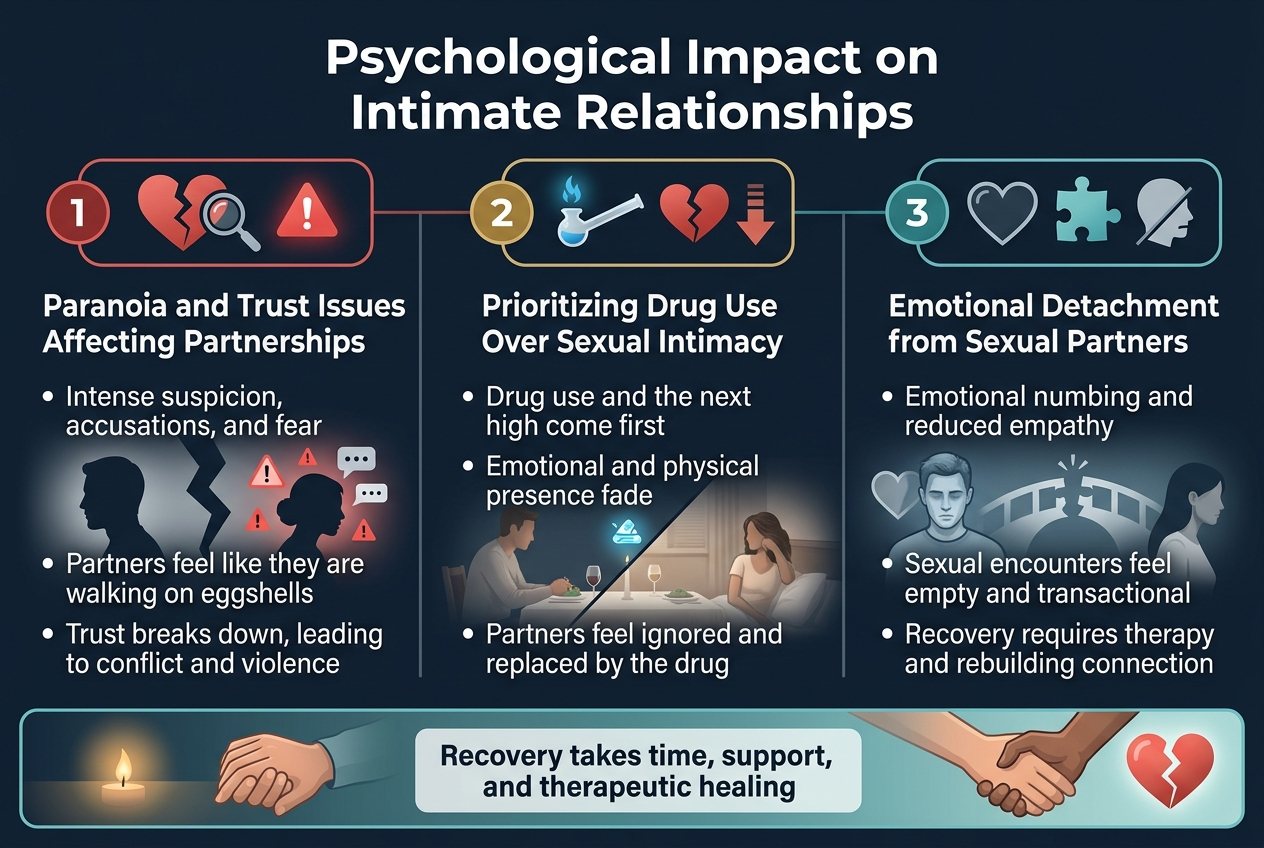
Crack cocaine fundamentally alters brain chemistry in ways that devastate the foundation of healthy relationships. Users frequently develop intense paranoia that makes maintaining intimate connections nearly impossible. This paranoia manifests as constant suspicion of partners, leading to accusations of infidelity, betrayal, or conspiracy that have no basis in reality. The drug’s impact on dopamine receptors creates a hypersensitive state where normal relationship interactions become interpreted as threats.
Partners of crack cocaine users often find themselves walking on eggshells, never knowing when innocent actions might trigger explosive accusations. The user may become convinced their partner is plotting against them, stealing their drugs, or working with law enforcement. These crack addiction relationship problems create an atmosphere of fear and mistrust that makes genuine intimacy impossible.
The paranoid episodes can escalate into aggressive confrontations, verbal abuse, or even violence. Trust, once broken by drug-induced delusions, becomes extremely difficult to rebuild even during periods of sobriety. Many relationships cannot survive the repeated cycles of suspicion and reconciliation.
Prioritizing Drug Use Over Sexual Intimacy
The compulsive nature of crack cocaine addiction creates a hierarchy where drug procurement and use consistently ranks above all other needs, including sexual connection. Users develop tunnel vision that focuses entirely on their next high, leaving little emotional or physical energy for intimate relationships. This shift in priorities happens gradually but becomes absolute as addiction progresses.
Sexual intimacy requires presence, attention, and emotional availability – qualities that become increasingly rare as crack addiction relationship problems intensify. Users may cancel dates, ignore their partner’s needs, or become completely absent during what should be intimate moments. The immediate gratification provided by crack cocaine makes the slower, more complex rewards of sexual and emotional intimacy seem insignificant by comparison.
Partners often report feeling like they’re competing with the drug for attention and losing every time. The user’s inability to be fully present during sexual encounters creates distance and resentment. Many describe feeling like their partner is physically there but emotionally vacant, going through the motions without genuine connection or desire.
Emotional Detachment from Sexual Partners
Extended crack cocaine use creates profound emotional numbing that extends far beyond sexual desire. Users gradually lose the ability to form meaningful emotional connections, viewing sexual partners more as objects for temporary gratification rather than whole human beings deserving of love and respect. This detachment represents one of the most devastating aspects of substance abuse intimacy problems.
The brain’s reward system becomes so disrupted that natural sources of pleasure and connection fail to register meaningfully. Sexual encounters may continue, but they lack the emotional depth and mutual vulnerability that characterize healthy intimate relationships. Partners often describe feeling used or discarded after sexual encounters with someone struggling with crack addiction.
This emotional disconnection creates a vicious cycle where partners pull away, leading to increased isolation for the user, which often drives them deeper into drug use. The ability to empathize, show genuine affection, or consider a partner’s emotional needs becomes severely compromised. Recovery from this emotional detachment often takes years and requires intensive therapeutic intervention to rebuild the capacity for authentic intimacy and connection.
High-Risk Sexual Behaviors and Health Consequences
Engaging in unprotected sex for drug procurement
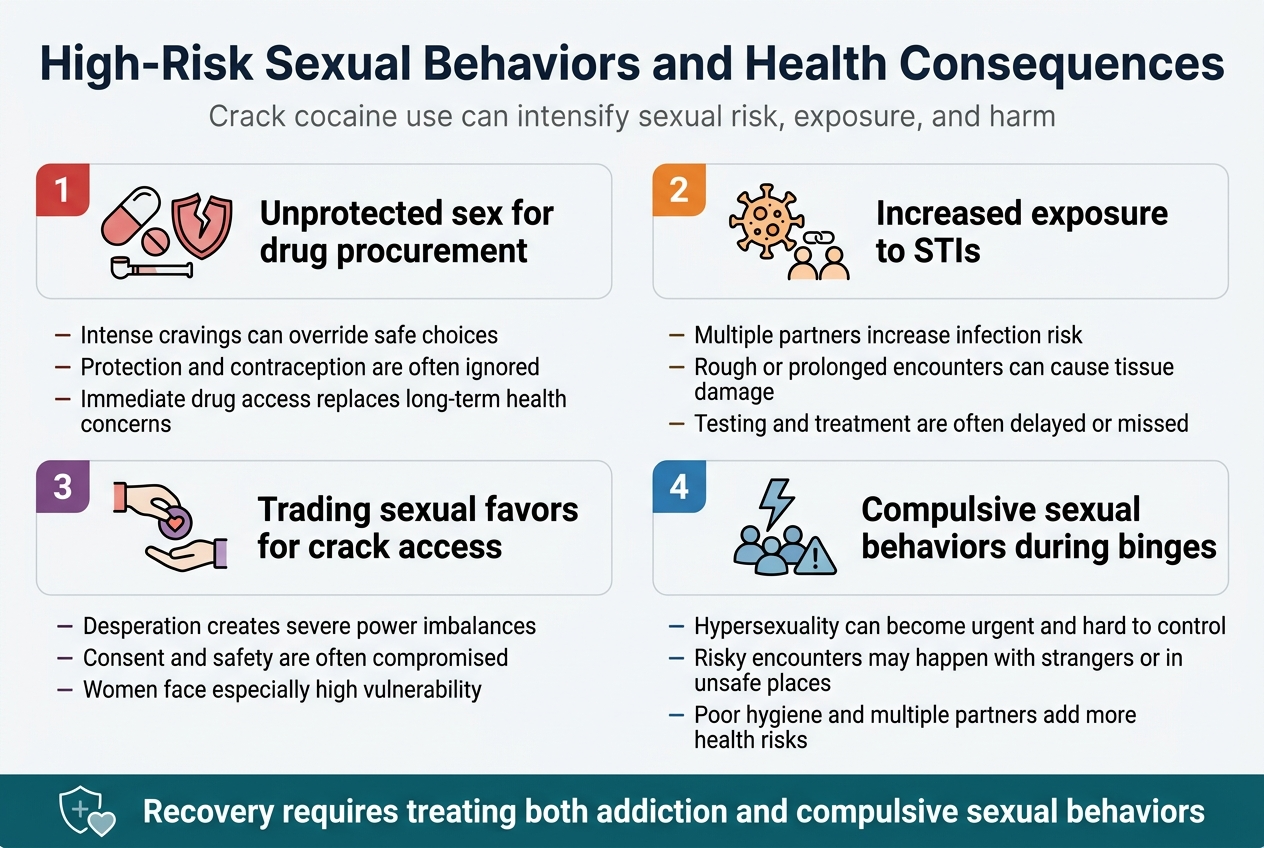
Crack cocaine addiction drives people to make desperate choices, and sexual decisions often become part of that dangerous cycle. When the need for the drug becomes overwhelming, users frequently abandon safe sex practices in exchange for quick access to crack. The intense cravings and impaired judgment that come with crack cocaine effects on libido create a perfect storm where protection becomes an afterthought.
Many users report engaging in spontaneous sexual encounters without considering contraception or disease prevention. The drug’s impact on decision-making centers in the brain means that even people who normally prioritize their sexual health may find themselves making risky choices. These situations often happen during periods of intense craving when the immediate need for drugs overrides long-term health concerns.
Increased exposure to sexually transmitted infections
The combination of risky sexual behaviors and crack use creates a dangerous environment for STI transmission. Users often engage with multiple partners in short timeframes, frequently within communities where infection rates are already elevated. Crack cocaine and sexual dysfunction also plays a role, as users may engage in rougher or more prolonged sexual activity that increases the risk of tissue damage and blood exposure.
Regular STI testing becomes nearly impossible for many users due to lifestyle disruption and lack of access to healthcare. The chaotic nature of addiction means that symptoms may go unnoticed or untreated, leading to more serious complications and continued transmission to others.
Trading sexual favors for crack cocaine access
Sexual bartering becomes a survival mechanism when traditional income sources disappear. This practice puts users in extremely vulnerable positions, often with dealers or other users who may take advantage of their desperation. The power imbalance in these situations frequently leads to non-consensual activities or situations where users cannot negotiate safer practices.
Women in particular face increased risks in these arrangements, though men also find themselves in compromising situations. The drug addiction sexual health connection becomes apparent as users sacrifice their bodily autonomy and safety for temporary drug access. These encounters rarely involve any discussion of protection or consent, creating multiple layers of harm.
Compulsive sexual behaviors during drug binges
Crack binges often trigger intense sexual urges that users struggle to control. These episodes can last for hours or days, during which normal boundaries and judgment disappear completely. Users report engaging in sexual activities with anyone available, often in unsafe environments like crack houses or public spaces.
The stimulant drugs sexual side effects include hypersexuality that feels urgent and uncontrollable. During these periods, users may engage in behaviors they would never consider while sober, including group activities, public sex, or encounters with strangers. The combination of poor hygiene during binges and multiple partners creates additional health risks beyond STI transmission.
Recovery from these patterns requires addressing both the addiction and the compulsive sexual behaviors that developed alongside drug use.
Recovery Challenges for Sexual Health
Timeline for natural libido restoration
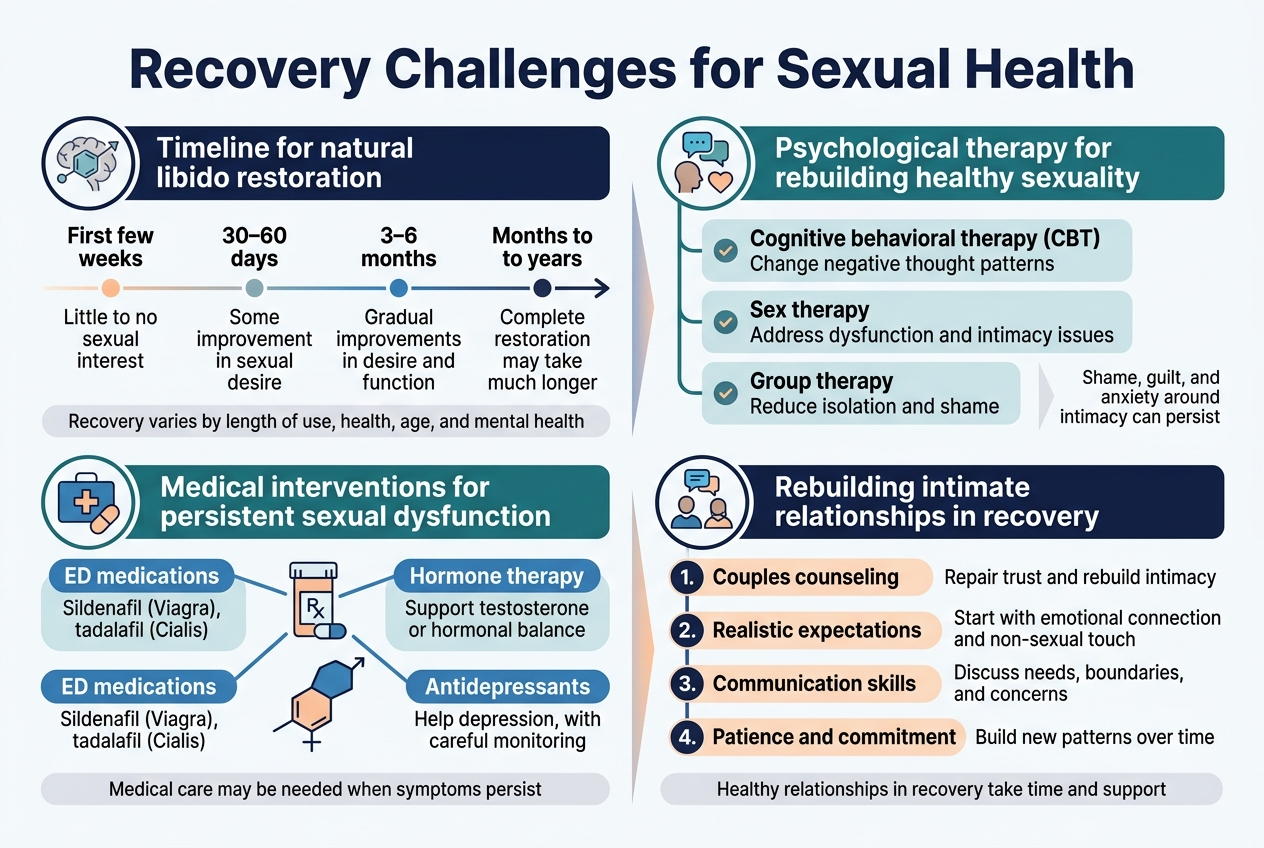
The journey back to healthy sexual function after crack cocaine addiction recovery isn’t quick or predictable. Most people experience some improvement in sexual desire within the first 30-60 days of sobriety, but complete restoration takes much longer. The brain’s dopamine system, which crack cocaine severely disrupts, needs months or even years to fully heal.
During the first few weeks, many recovering users report little to no sexual interest. This period can feel discouraging, but it’s a normal part of the healing process. The brain is essentially relearning how to produce pleasure and arousal naturally without the artificial stimulation from drugs.
Between 3-6 months of sobriety, most people notice gradual improvements in sexual desire and function. However, the timeline varies dramatically based on factors like length of use, frequency of use, overall health, age, and concurrent mental health issues. Some individuals may see improvements sooner, while others might wait up to two years for significant recovery.
Psychological therapy for rebuilding healthy sexuality
Addiction recovery sexual health requires professional support to address the complex psychological barriers that develop during active use. Many recovering crack users struggle with shame, guilt, and anxiety around intimacy – emotions that can persist long after physical cravings subside.
Cognitive behavioral therapy (CBT) helps individuals identify and change negative thought patterns about sex and relationships. This approach is particularly effective for addressing performance anxiety and fear of intimacy that commonly develop during addiction recovery.
Sex therapy specifically targets sexual dysfunction and intimacy issues. These specialized therapists understand how substance abuse intimacy problems manifest and can provide targeted interventions. They work with individuals or couples to rebuild healthy sexual communication, address specific dysfunctions, and develop realistic expectations for recovery.
Group therapy sessions focusing on sexual health in recovery create safe spaces to discuss these sensitive topics with others who share similar experiences. These sessions reduce isolation and shame while providing practical strategies for navigating sexual relationships in sobriety.
Medical interventions for persistent sexual dysfunction
When crack cocaine sexual dysfunction persists beyond the typical recovery timeline, medical intervention may become necessary. Healthcare providers can prescribe medications to address specific sexual health issues that don’t resolve naturally.
For men experiencing erectile dysfunction, doctors might prescribe phosphodiesterase-5 inhibitors like sildenafil (Viagra) or tadalafil (Cialis). These medications can provide temporary support while the body’s natural function continues recovering.
Hormone therapy may help both men and women whose crack cocaine effects on libido have disrupted their hormonal balance. Low testosterone in men or hormonal imbalances in women can contribute to ongoing sexual dysfunction even after prolonged sobriety.
Antidepressants might be prescribed if depression is contributing to low libido, though some antidepressants can also cause sexual side effects. Finding the right medication balance requires careful coordination between addiction specialists and primary care physicians.
Rebuilding intimate relationships in recovery
Crack addiction relationship problems don’t disappear when someone gets sober. The damage caused by years of drug use, broken trust, and neglected relationships requires intentional effort to repair. Partners often struggle with their own trauma and may have difficulty trusting again.
Couples counseling provides a structured environment for addressing past hurts and rebuilding intimacy. Professional therapists help both partners understand how addiction affected their relationship and develop new patterns of communication and connection.
Setting realistic expectations is crucial during this process. Physical intimacy might need to develop slowly, starting with non-sexual touch and emotional connection before progressing to sexual activity. Rushing this process often leads to setbacks and renewed relationship stress.
Communication skills training helps couples learn to discuss their needs, boundaries, and concerns openly. Many people in recovery need to relearn how to be vulnerable and intimate without the false confidence that drugs provided.
Building new relationship patterns takes time and patience from both partners. Success often depends on both individuals’ commitment to recovery and their willingness to seek professional help when needed.
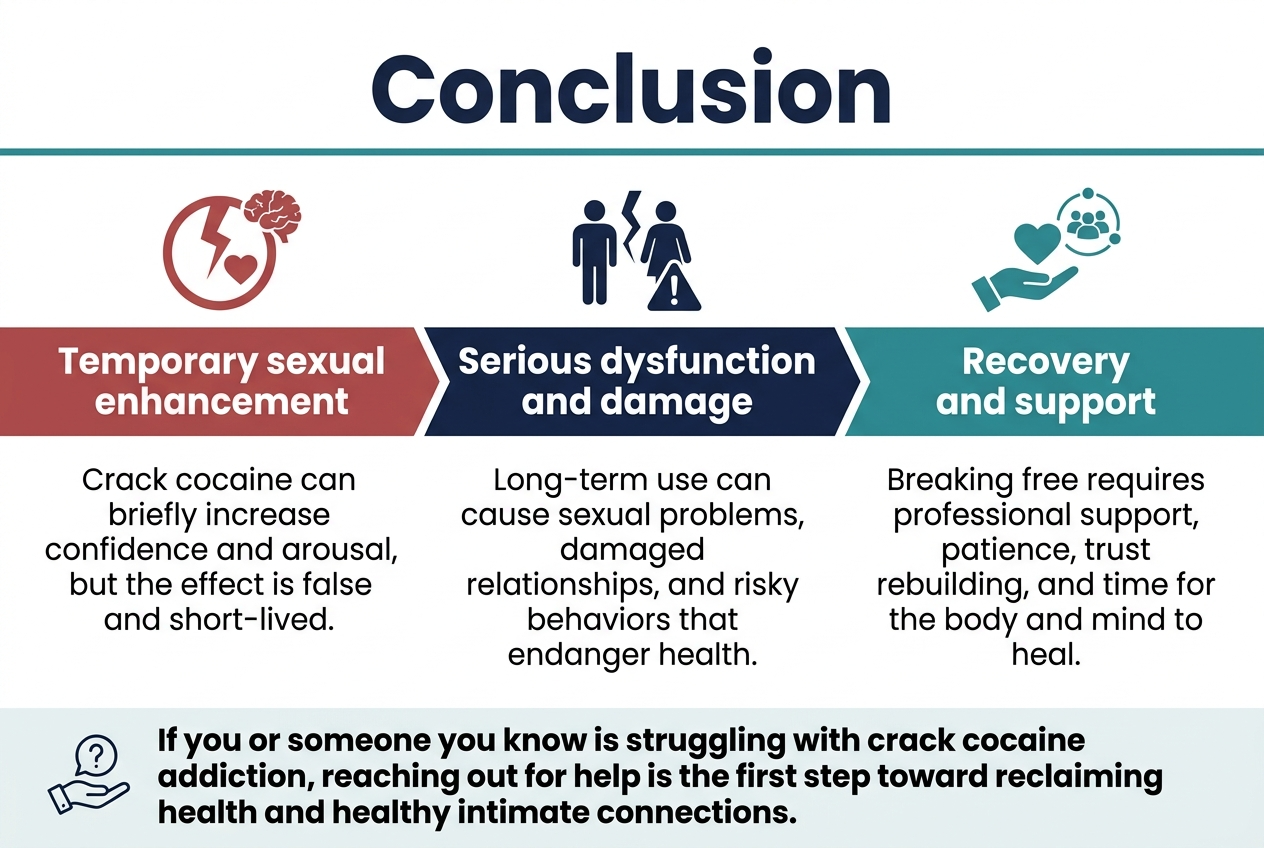
Crack cocaine creates a devastating cycle that starts with temporary sexual enhancement but quickly spirals into serious dysfunction and dangerous behaviors. The drug’s chemical impact on the brain initially tricks users into feeling more confident and sexually aroused, but this false boost comes at a steep price. Long-term use leads to significant sexual problems, damaged relationships, and risky behaviors that put users and their partners at serious health risk.
Breaking free from crack’s grip on sexual health requires professional support and patience. Recovery isn’t just about stopping drug use – it’s about rebuilding trust in relationships, addressing the psychological damage, and allowing the body time to heal. If you or someone you know is struggling with crack cocaine addiction, reaching out for help is the first step toward reclaiming both your overall health and your ability to form healthy, intimate connections.