
What is the most trafficked drug today?
What’s Really Happening with Global Drug Trafficking Right Now?
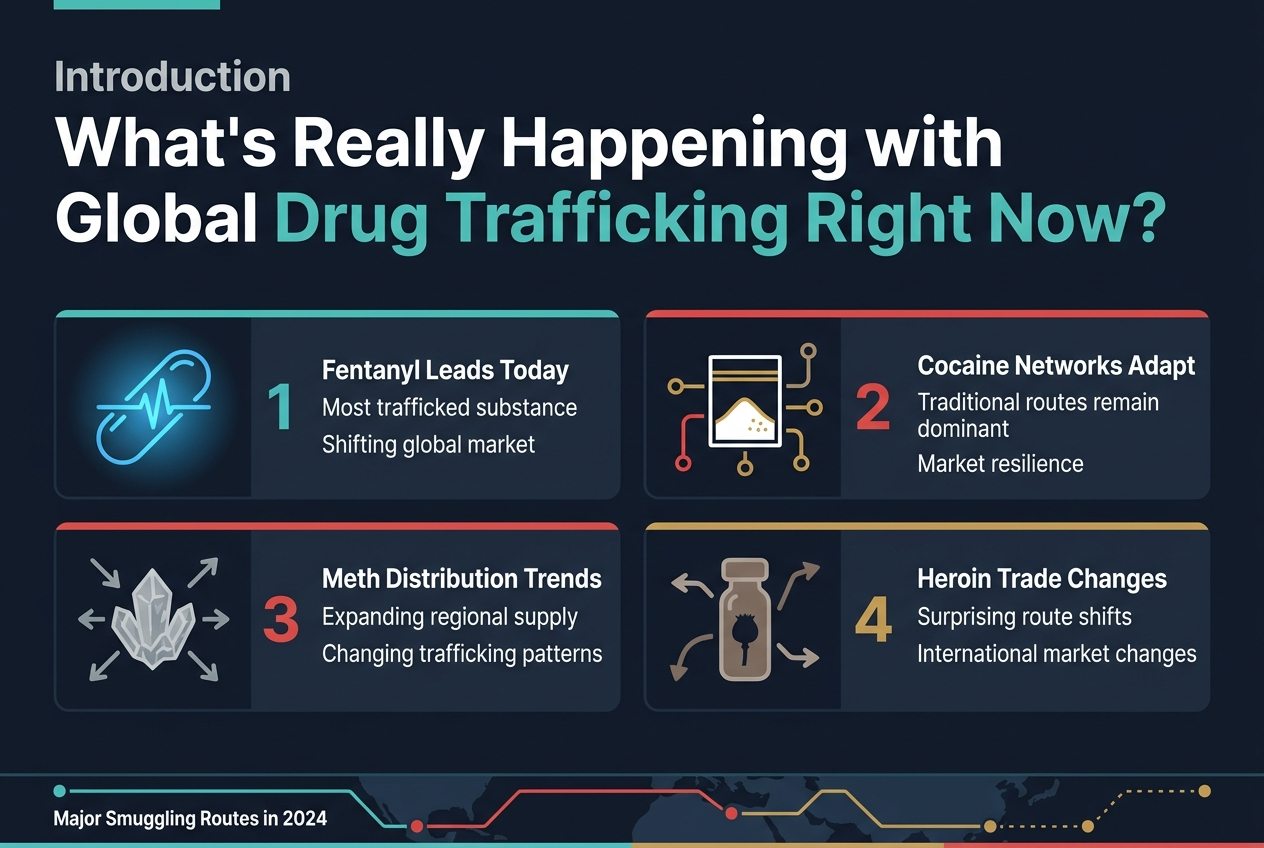
If you’re curious about current drug trafficking trends or need reliable information for research, education, or policy work, understanding which substances dominate today’s illegal markets is crucial. The most trafficked drug today has shifted dramatically from what many people expect, reshaping global drug trafficking patterns and challenging law enforcement worldwide.
This analysis breaks down the current landscape by examining fentanyl’s rise as the leading trafficked substance and how traditional cocaine trafficking networks continue to adapt and maintain market dominance. We’ll also explore methamphetamine distribution trends and the surprising changes happening with heroin trade patterns that are reshaping international drug markets across major smuggling routes in 2024.
Understanding Global Drug Trafficking Patterns
Current statistics on worldwide drug seizures
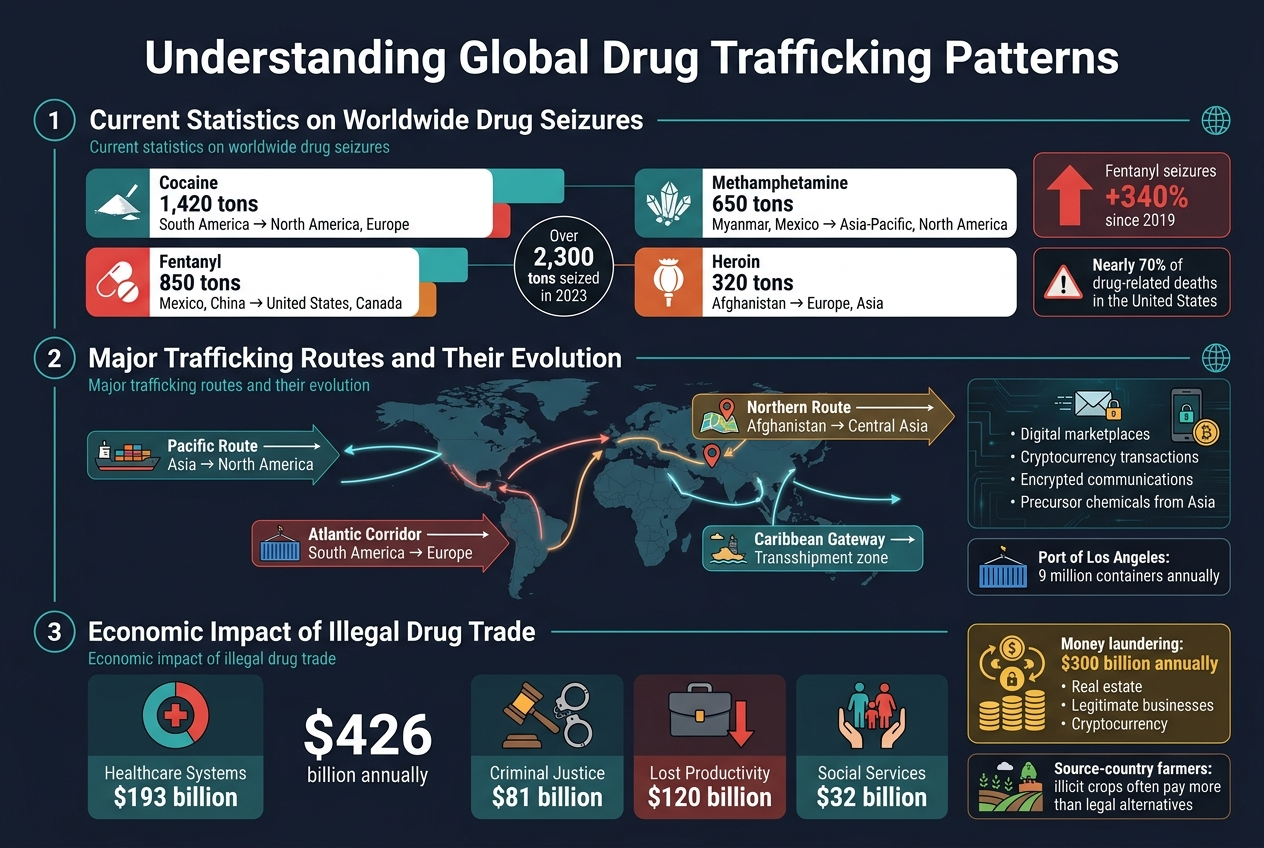
Global drug seizures reached record-breaking levels in recent years, with authorities confiscating over 2,300 tons of various substances in 2023 alone. The most trafficked drug today varies by region, but synthetic drugs like fentanyl dominate seizure statistics in North America, while cocaine remains the primary concern in Latin America and Europe.
International drug trade statistics reveal striking patterns:
| Drug Type | Global Seizures (2023) | Primary Source Regions | Main Destination Markets |
|---|---|---|---|
| Cocaine | 1,420 tons | South America | North America, Europe |
| Fentanyl | 850 tons | Mexico, China | United States, Canada |
| Methamphetamine | 650 tons | Myanmar, Mexico | Asia-Pacific, North America |
| Heroin | 320 tons | Afghanistan | Europe, Asia |
The data shows synthetic drugs experiencing explosive growth, with fentanyl seizures increasing by 340% since 2019. Fentanyl trafficking statistics indicate this synthetic opioid now accounts for nearly 70% of all drug-related deaths in the United States, making it the deadliest substance in circulation.
Law enforcement agencies report that trafficking organizations have adapted quickly to market demands, with Mexican cartels now producing fentanyl using precursor chemicals primarily sourced from Asia. This shift represents a fundamental change in global drug trafficking patterns, moving away from traditional plant-based substances toward laboratory-manufactured drugs that offer higher profit margins and easier transportation.
Major trafficking routes and their evolution
Traditional drug smuggling routes have transformed dramatically over the past decade. The classic “Golden Triangle” and “Golden Crescent” routes for heroin trafficking have given way to more diverse networks focusing on synthetic substances.
Drug smuggling routes 2024 show several key corridors:
Primary Trafficking Corridors:
-
Pacific Route: Connects Asian production centers to North American markets
-
Atlantic Corridor: Links South American cocaine producers to European consumers
-
Northern Route: Facilitates movement from production sites in Afghanistan through Central Asia
-
Caribbean Gateway: Serves as a transshipment point for multiple substances
The most significant change involves the emergence of digital marketplaces and cryptocurrency transactions, which have created virtual trafficking routes alongside physical ones. Mexican cartels now coordinate with Chinese chemical suppliers through encrypted communications, arranging precursor shipments that arrive at ports thousands of miles from the final production sites.
Border security agencies note that trafficking organizations increasingly use legal commerce as cover. Fentanyl precursors arrive hidden in legitimate chemical shipments, while finished products move through express mail services and commercial shipping containers. The Port of Los Angeles alone processes over 9 million containers annually, making detection extremely challenging.
Maritime routes have become particularly important for cocaine trafficking networks, with organizations using semi-submersible vessels, fishing boats, and cargo containers to move massive quantities. The Caribbean remains a critical transshipment zone, with drugs moving through dozens of island nations before reaching final destinations.
Economic impact of illegal drug trade
The illegal drug market analysis reveals an industry worth an estimated $426 billion annually, rivaling the GDP of many developed nations. This underground economy creates ripple effects that extend far beyond simple supply and demand dynamics.
Economic Consequences by Sector:
-
Healthcare Systems: $193 billion in treatment and emergency response costs
-
Criminal Justice: $81 billion in enforcement, prosecution, and incarceration
-
Lost Productivity: $120 billion in reduced economic output
-
Social Services: $32 billion in family support and rehabilitation programs
The synthetic drug boom has altered traditional economic models within trafficking organizations. Production costs for fentanyl are roughly 50 times lower than heroin, while street prices remain comparable. This margin advantage has attracted new players to the market and intensified competition among established groups.
Money laundering operations have become increasingly sophisticated, with criminal organizations investing drug proceeds in legitimate businesses, real estate, and cryptocurrency. Financial intelligence units estimate that drug trafficking organizations wash approximately $300 billion annually through various schemes.
Rural communities in source countries face particular economic challenges. Traditional coca and opium farmers often earn more from illicit crops than legal alternatives, creating economic dependence that’s difficult to break. Development programs attempting to substitute legal crops have shown mixed results, with success largely dependent on providing farmers with comparable income opportunities.
The emergence of online marketplaces has democratized certain aspects of drug distribution, allowing smaller operators to access international markets previously controlled by major cartels. This shift has created new economic dynamics and enforcement challenges for authorities worldwide.
Fentanyl as the Leading Trafficked Substance
Production Volumes and Distribution Networks
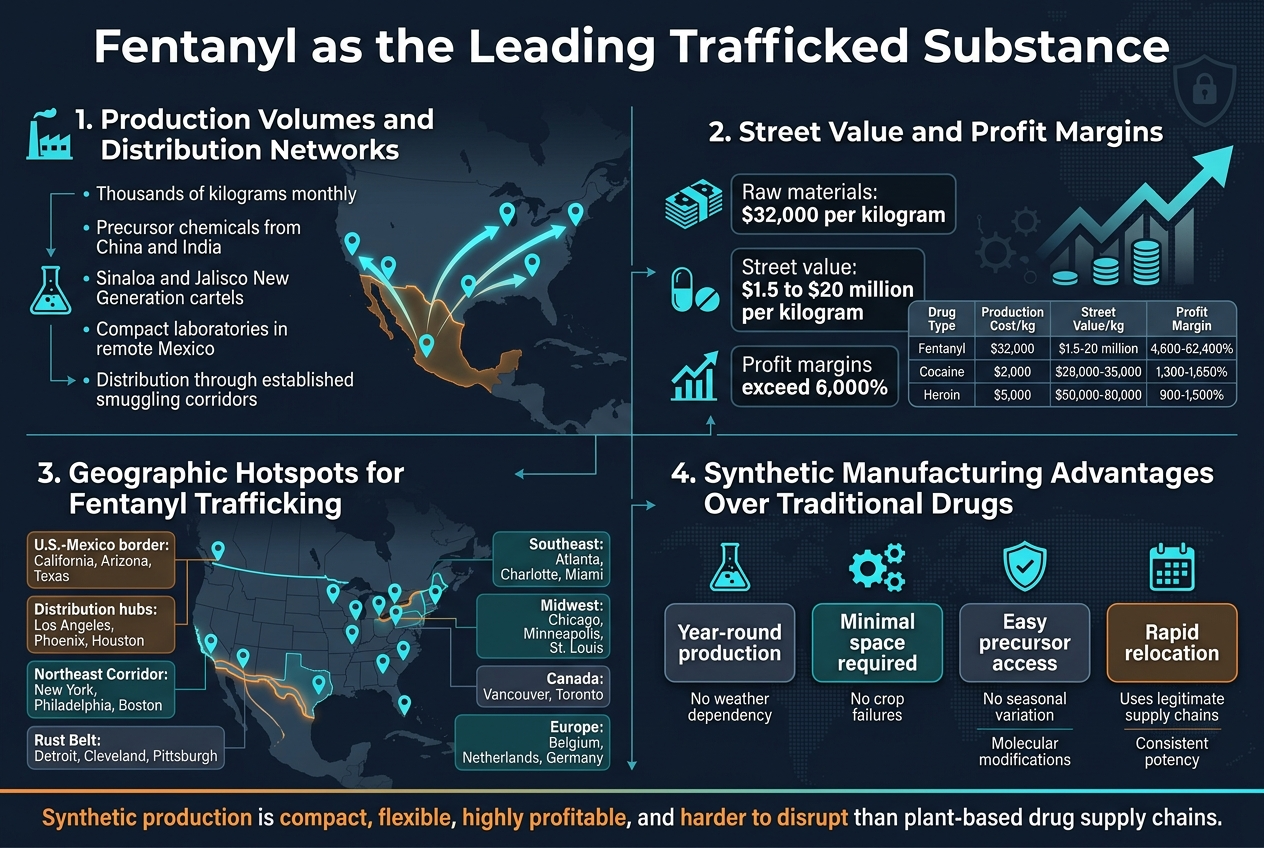
Fentanyl dominates today’s illegal drug landscape through massive synthetic production operations that dwarf traditional drug manufacturing. Mexican cartels have built sophisticated networks that produce thousands of kilograms monthly, primarily using precursor chemicals imported from China and India. The Sinaloa and Jalisco New Generation cartels control the most significant production facilities, often hidden in remote areas of Mexico where detection remains challenging.
Unlike plant-based drugs requiring extensive agricultural operations, fentanyl production happens in compact laboratory settings. A single facility can produce enough fentanyl to supply entire regions, making it the most trafficked drug today by volume and impact. The distribution networks span from production sites in Mexico through established smuggling corridors into major U.S. metropolitan areas.
These networks operate with remarkable efficiency, using existing cocaine and heroin trafficking routes while adapting to digital communication methods. Cartels coordinate shipments through encrypted messaging platforms, allowing real-time adjustments to avoid law enforcement detection.
Street Value and Profit Margins for Traffickers
The economics of fentanyl trafficking create unprecedented profit opportunities. Raw materials cost approximately $32,000 per kilogram of pure fentanyl, which street dealers then cut and distribute into millions of individual doses. A single kilogram can generate between $1.5 to $20 million in street sales, depending on purity levels and local market conditions.
Profit margins exceed 6,000% in many cases, making fentanyl more lucrative than traditional drugs. Traffickers can purchase precursor chemicals legally or semi-legally, then synthesize final products without the agricultural risks, seasonal limitations, and extensive manpower required for cocaine or heroin production.
| Drug Type | Production Cost/kg | Street Value/kg | Profit Margin |
|---|---|---|---|
| Fentanyl | $32,000 | $1.5-20 million | 4,600-62,400% |
| Cocaine | $2,000 | $28,000-35,000 | 1,300-1,650% |
| Heroin | $5,000 | $50,000-80,000 | 900-1,500% |
Geographic Hotspots for Fentanyl Trafficking
Major trafficking corridors center around the U.S.-Mexico border, with primary entry points through California, Arizona, and Texas. Cities like Los Angeles, Phoenix, and Houston serve as distribution hubs where cartels break down bulk shipments for regional networks.
The eastern United States represents the largest consumption market, with fentanyl trafficking statistics showing concentrated activity in:
-
Northeast Corridor: New York, Philadelphia, Boston
-
Rust Belt: Detroit, Cleveland, Pittsburgh
-
Southeast: Atlanta, Charlotte, Miami
-
Midwest: Chicago, Minneapolis, St. Louis
Canadian routes have gained importance as traffickers exploit the northern border’s extensive unmonitored crossings. Vancouver and Toronto serve as secondary distribution centers for both domestic Canadian markets and re-export operations back into the United States.
European markets show growing fentanyl presence, though cocaine and heroin still dominate. Belgium, Netherlands, and Germany represent key entry points where trafficking organizations test new synthetic drug formulations.
Synthetic Manufacturing Advantages Over Traditional Drugs
Synthetic production offers traffickers multiple strategic advantages that traditional plant-based drugs cannot match. Manufacturing occurs year-round without weather dependencies, crop failures, or seasonal variations that affect cocaine and heroin supplies. Laboratory facilities require minimal space compared to vast coca plantations or poppy fields.
Chemical precursors remain widely available through legitimate pharmaceutical and industrial supply chains, making raw material acquisition easier than securing agricultural land or processing facilities in remote locations. Synthetic drugs can be modified at the molecular level, allowing traffickers to create new variants that temporarily evade legal restrictions and detection methods.
Quality control becomes more precise in laboratory settings, enabling consistent potency levels that street dealers prefer. This reliability builds customer loyalty while reducing the waste and variability common in plant-based drug processing.
The compact nature of synthetic operations allows rapid relocation when law enforcement pressure increases. Cartels can dismantle and relocate entire production facilities within days, while traditional drug operations require months or years to establish new agricultural sites and processing infrastructure.
Cocaine Trafficking Networks and Market Dominance
South American Production and Export Data
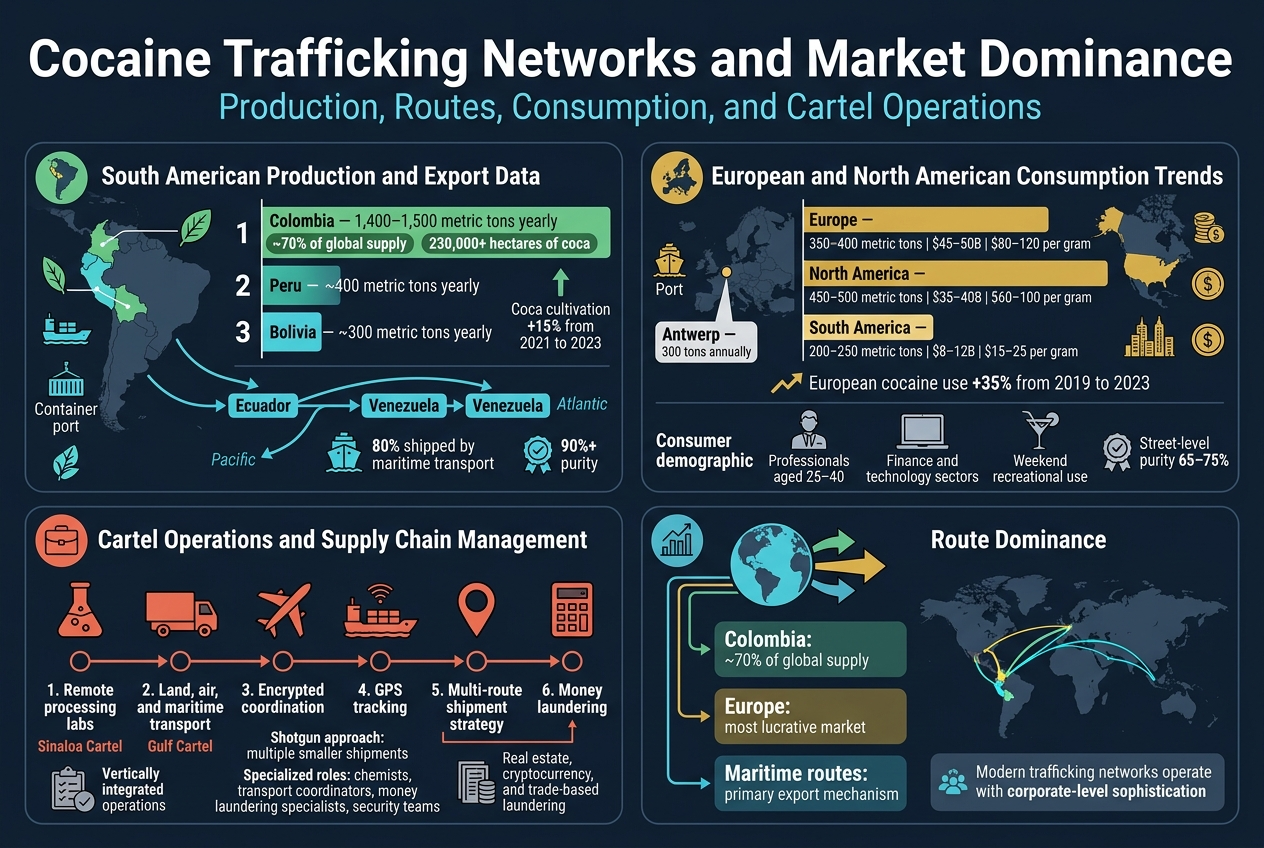
Colombia remains the undisputed leader in global cocaine production, accounting for approximately 70% of the world’s supply according to recent United Nations data. The country produces an estimated 1,400-1,500 metric tons annually, with cultivation areas spanning over 230,000 hectares of coca plants. Peru follows as the second-largest producer at roughly 400 metric tons yearly, while Bolivia contributes around 300 metric tons to global drug trafficking patterns.
Production has actually increased in recent years despite eradication efforts. Colombian authorities report that coca cultivation expanded by 15% between 2021 and 2023, primarily in remote regions where government presence remains limited. The shift toward more potent coca varieties and improved processing techniques means traffickers can extract higher cocaine yields from smaller cultivation areas.
Export routes have diversified significantly, with traditional Caribbean pathways complemented by Pacific Coast shipping lanes. Drug trafficking organizations now use sophisticated logistics networks, moving product through Ecuador and Venezuela before reaching international waters. Container ships departing from ports in Buenaventura and Cartagena represent the primary export mechanism, with an estimated 80% of cocaine trafficking networks utilizing maritime transport.
Recent seizure data reveals that traffickers are producing cocaine with purity levels exceeding 90%, compared to 60-70% purity common in previous decades. This enhanced quality allows cartels to command premium prices while reducing shipping volumes, making detection more challenging for law enforcement agencies.
European and North American Consumption Trends
European cocaine consumption has reached unprecedented levels, with the continent now representing the most lucrative market globally. The European Monitoring Centre for Drugs and Drug Addiction reports that cocaine use increased by 35% across major European cities between 2019 and 2023. Belgium’s Antwerp port has become the primary entry point, processing an estimated 300 tons of cocaine annually.
| Region | Annual Consumption (Metric Tons) | Market Value (Billions USD) | Price per Gram |
|---|---|---|---|
| Europe | 350-400 | $45-50 | $80-120 |
| North America | 450-500 | $35-40 | $60-100 |
| South America | 200-250 | $8-12 | $15-25 |
North American markets show different consumption patterns, with the United States remaining the largest single consumer despite declining usage rates in some demographics. Mexican cartels have consolidated control over distribution networks, establishing sophisticated supply chains that deliver product from South American producers to street-level dealers across 50 states.
The demographic profile of cocaine users has shifted notably. European data shows increasing use among professionals aged 25-40, particularly in finance and technology sectors. Weekend recreational use has become normalized in many urban centers, driving consistent demand that supports cocaine trafficking networks operations.
Purity levels reaching consumers have improved dramatically. Street-level cocaine in European cities now averages 65-75% purity, compared to 40-50% a decade ago. This quality improvement reflects the streamlined supply chains and reduced handling that characterizes modern trafficking operations.
Cartel Operations and Supply Chain Management
Modern cocaine trafficking networks operate with corporate-level sophistication, employing advanced logistics management and risk mitigation strategies. The Sinaloa and Gulf cartels have established partnerships with Colombian producers, creating vertically integrated operations that control every stage from cultivation to street distribution.
Supply chain management involves multiple transportation phases designed to minimize risk and maximize efficiency. Initial processing occurs in remote laboratories near cultivation sites, where coca paste gets refined into cocaine hydrochloride. Product then moves through established corridors using a combination of land, air, and maritime transport.
Technology integration has revolutionized cartel operations. Encrypted communication systems coordinate shipments across international borders, while GPS tracking monitors product movement in real-time. Some organizations employ sophisticated accounting software to manage multi-million dollar transactions and maintain detailed profit-loss statements for different trafficking routes.
Risk management strategies include diversified shipping methods and redundant supply lines. Major cartels typically use the “shotgun approach,” sending multiple smaller shipments simultaneously rather than concentrating product in single large shipments. This method ensures that law enforcement seizures don’t cripple entire operations.
Personnel management mirrors legitimate businesses, with specialized roles including chemists, transportation coordinators, money laundering specialists, and security teams. Many cartels offer competitive compensation packages and maintain retirement programs for long-term employees, creating organizational loyalty that enhances operational security.
Financial operations involve complex money laundering schemes that blend legitimate business activities with illegal proceeds. Real estate investments, cryptocurrency transactions, and trade-based money laundering help cartels integrate profits into the formal economy while funding continued operations.
Heroin Trade and Its Declining Market Share
Afghan Poppy Production and Global Supply
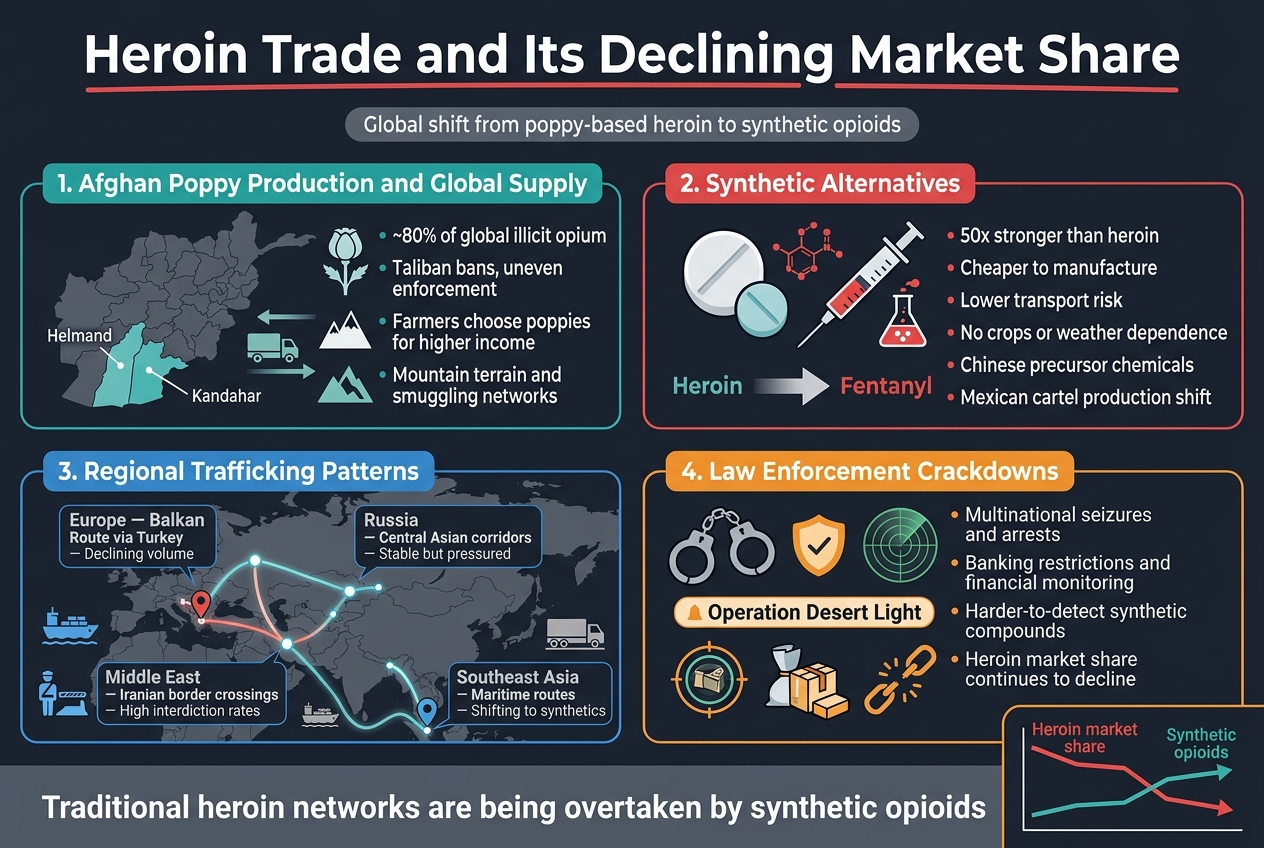
Afghanistan remains the world’s largest opium producer, accounting for roughly 80% of global illicit opium production despite significant political upheaval. The Taliban’s complex relationship with poppy cultivation creates ongoing uncertainty in global heroin markets. While they’ve announced bans on cultivation, enforcement remains inconsistent across different regions. Afghan farmers continue growing poppies due to economic necessity, as the crop provides substantially higher returns than legal alternatives.
The country’s mountainous terrain and established smuggling networks make it an ideal hub for opium production. Traditional growing regions like Helmand and Kandahar provinces maintain their output levels, feeding global heroin trade decline patterns. However, this supply faces increasing pressure from both domestic policies and international interdiction efforts.
Competition from Synthetic Alternatives
Synthetic opioids, particularly fentanyl, have dramatically disrupted traditional heroin markets. Fentanyl’s potency – 50 times stronger than heroin – means smaller quantities produce the same effects, making it more profitable for traffickers. Mexican cartels have shifted focus toward fentanyl production because it’s cheaper to manufacture and doesn’t require agricultural inputs.
Chinese chemical suppliers provide precursor chemicals for synthetic drug production, creating supply chains that bypass traditional poppy-dependent routes. This shift represents a fundamental change in the illegal drug market analysis, as synthetic alternatives offer:
-
Lower production costs
-
Reduced transportation risks
-
Independence from weather and agricultural conditions
-
Higher profit margins for trafficking organizations
Regional Trafficking Patterns in Asia and Europe
The “Golden Crescent” route through Iran, Turkey, and the Balkans remains active but faces increasing competition from synthetic alternatives. European markets show declining heroin purity levels as dealers cut products with cheaper alternatives or switch entirely to synthetic substitutes.
Asian trafficking patterns follow established networks through Central Asian republics, with Russia serving as both a transit point and major consumer market. Pakistani ports provide alternative export routes, while Iranian borders see constant smuggling activity despite heavy enforcement.
Key Regional Routes:
| Region | Primary Routes | Current Status |
|---|---|---|
| Europe | Balkan Route via Turkey | Declining volume |
| Russia | Central Asian corridors | Stable but pressured |
| Middle East | Iranian border crossings | High interdiction rates |
| Southeast Asia | Maritime routes | Shifting to synthetics |
Impact of Law Enforcement Crackdowns
International cooperation has intensified pressure on traditional heroin trafficking networks. Operation Desert Light and similar multinational efforts have disrupted major trafficking organizations, leading to significant seizures and arrests. These successes force traffickers toward synthetic alternatives that are harder to detect and intercept.
Banking restrictions and financial monitoring make it difficult for organizations to launder heroin proceeds, while synthetic drug operations can operate with smaller financial footprints. Modern detection technology struggles with new synthetic compounds, giving synthetic producers advantages over traditional heroin traffickers.
The combination of enforcement pressure and market economics explains why heroin’s share of the most trafficked drug today statistics continues declining. While heroin remains present in global markets, its dominance has clearly shifted toward more profitable and harder-to-detect synthetic alternatives.
Methamphetamine Distribution and Growing Demand
Manufacturing hubs in Mexico and Southeast Asia
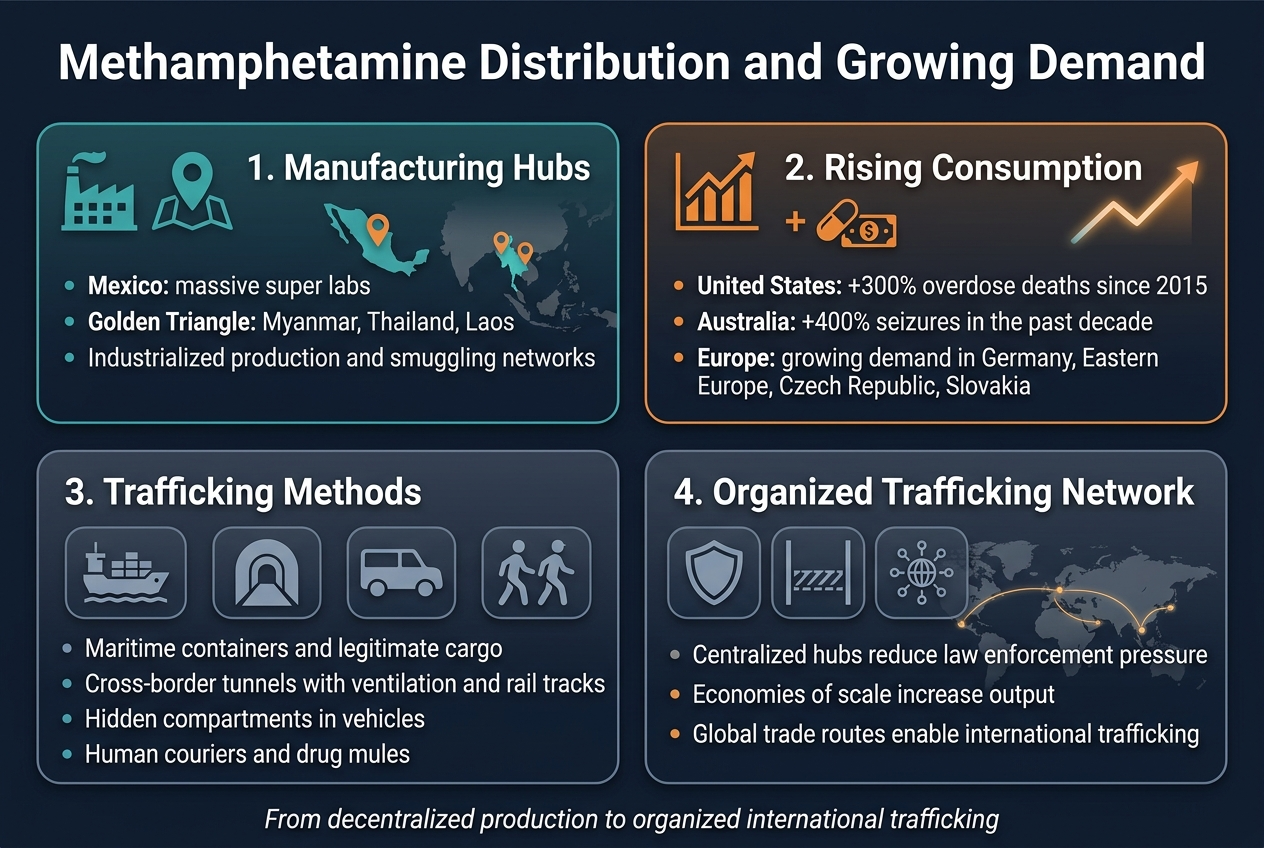
Mexico has become the primary methamphetamine production center for North American markets, with cartels operating massive super labs capable of producing hundreds of pounds daily. These facilities, often located in remote areas of Sinaloa, Jalisco, and Michoacán, benefit from established smuggling networks and access to precursor chemicals. The Mexican cartels have essentially industrialized meth production, moving away from small-scale operations to factory-like facilities that can supply continental demand.
Southeast Asia, particularly the Golden Triangle region spanning Myanmar, Thailand, and Laos, dominates global methamphetamine distribution trends. Myanmar alone produces an estimated 50-60 tons of methamphetamines annually, with production concentrated in areas controlled by ethnic armed organizations. These groups have transformed traditional opium-growing regions into meth manufacturing zones, taking advantage of weak governance and abundant precursor chemicals smuggled from China and India.
The shift toward these centralized production hubs reflects the evolution of the methamphetamine trade from decentralized domestic production to organized international trafficking operations. This consolidation allows criminal organizations to achieve economies of scale while reducing law enforcement pressure on individual producers.
Rising consumption rates in developed countries
Methamphetamine use has surged dramatically across developed nations, making it one of the most trafficked drug today categories globally. The United States has experienced a 300% increase in meth-related overdose deaths since 2015, with the drug now affecting suburban and rural communities that previously saw limited exposure to synthetic stimulants.
Australia faces particularly severe methamphetamine distribution challenges, with consumption rates among the highest globally. The country’s geographic isolation makes it a lucrative market where methamphetamine commands premium prices, attracting international trafficking organizations. Australian authorities report that meth seizures have increased by over 400% in the past decade.
European markets are experiencing rapid growth in methamphetamine consumption, especially in Eastern European countries and Germany. The drug’s lower cost compared to cocaine, combined with its longer-lasting effects, appeals to users seeking affordable stimulants. Czech Republic and Slovakia have become regional distribution centers, leveraging their strategic location between production areas and Western European markets.
Trafficking methods and border crossing strategies
Modern methamphetamine trafficking relies heavily on concealment within legitimate cargo shipments, with criminal organizations exploiting global trade networks. Maritime containers represent the preferred method for large-scale shipments, with drugs hidden in everything from machinery parts to food products. Port facilities in major cities often serve as entry points before distribution through domestic networks.
Cross-border tunnels have become increasingly sophisticated, particularly along the US-Mexico border where cartels invest millions in subterranean infrastructure. These tunnels feature ventilation systems, lighting, and rail tracks for efficient drug transport. Some extend over half a mile underground and emerge in warehouses or residential properties.
Vehicle modifications remain a cornerstone of smaller-scale trafficking operations. Criminals create hidden compartments in gas tanks, door panels, and vehicle frames that can evade standard inspection procedures. Professional mechanics work exclusively for trafficking organizations, developing increasingly sophisticated concealment methods that challenge law enforcement detection capabilities.
Human couriers, or “mules,” continue playing significant roles in methamphetamine trafficking, particularly for air transport. These individuals swallow drug-filled capsules or conceal substances in body cavities, accepting substantial personal risk for relatively small payments. Criminal organizations often target vulnerable individuals, including those facing financial hardship or legal problems.
Law Enforcement Response and Detection Challenges
International cooperation and intelligence sharing
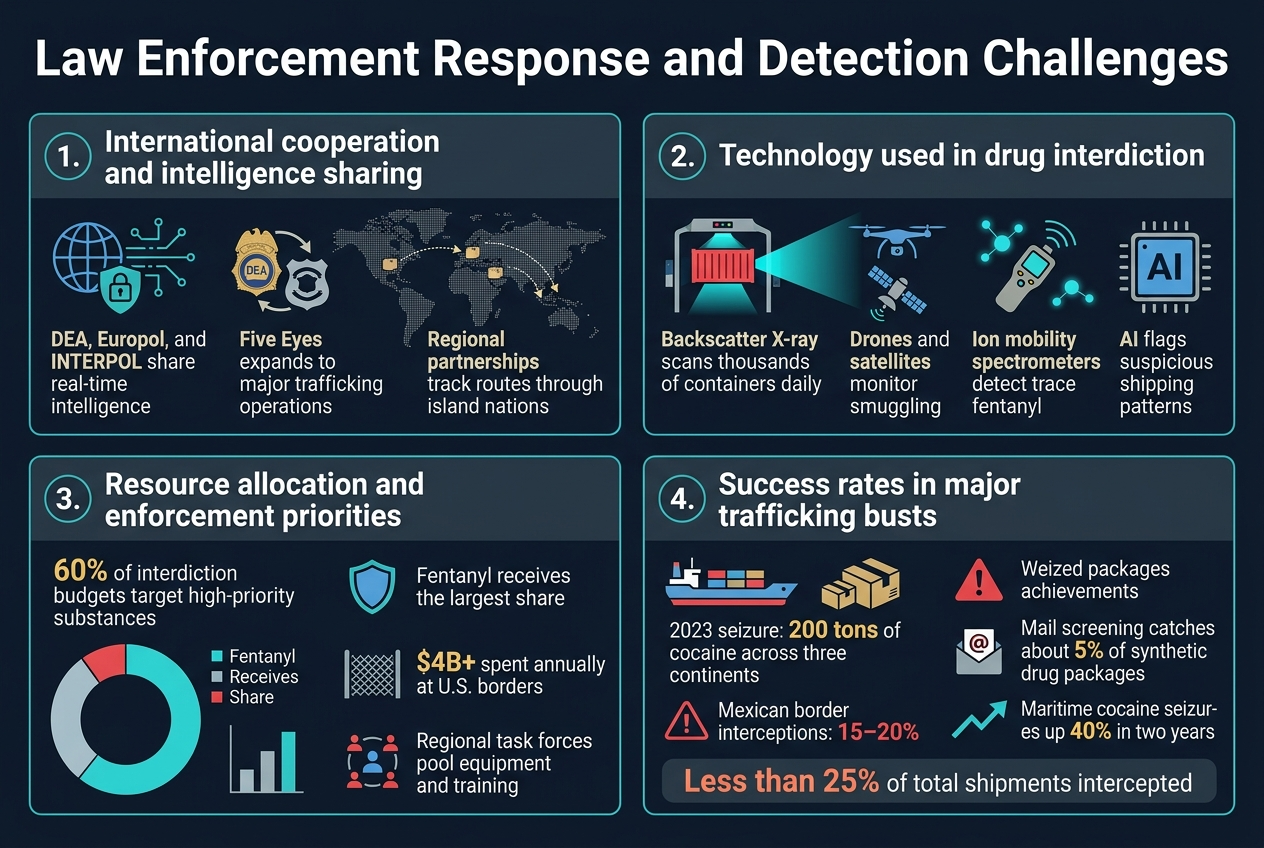
Breaking up global drug trafficking patterns requires unprecedented coordination between nations. The DEA, Europol, and INTERPOL now share real-time intelligence through encrypted networks, tracking shipments across continents. Joint task forces monitor the most trafficked drug today through specialized databases that connect seizure data from dozens of countries.
The Five Eyes intelligence alliance has expanded its focus beyond terrorism to include major trafficking operations. When Mexican cartels ship fentanyl through Canadian ports, American analysts can alert their northern neighbors within hours. This cross-border communication has disrupted several multi-ton cocaine shipments before they reached European markets.
Regional partnerships like the Caribbean Joint Intelligence Center track smuggling routes through island nations. These smaller countries often lack the resources to monitor their waters independently, making cooperation essential for intercepting drugs bound for North American and European markets.
Technology used in drug interdiction
Advanced scanning technology has transformed how authorities detect hidden narcotics. Backscatter X-ray machines can identify suspicious materials inside shipping containers without opening them. These systems process thousands of containers daily at major ports, flagging irregularities for manual inspection.
Maritime interdiction relies heavily on satellite surveillance and drone technology. The U.S. Coast Guard uses unmanned aircraft to monitor vast ocean areas, tracking suspicious vessels that might be carrying cocaine trafficking networks’ shipments. These drones can stay airborne for over 24 hours, providing continuous coverage of known smuggling corridors.
Chemical detection systems have become incredibly sophisticated. Ion mobility spectrometers can identify trace amounts of fentanyl trafficking substances on packages, clothing, or currency. Border agents use handheld versions of these devices during routine inspections, significantly increasing their ability to detect concealed drugs.
Artificial intelligence now analyzes shipping manifests to identify suspicious patterns. Machine learning algorithms flag unusual trade flows, such as agricultural equipment shipments to regions with no farming activity, which often conceal illegal substances.
Resource allocation and enforcement priorities
Law enforcement agencies face difficult decisions about where to focus their limited resources. The rise of fentanyl has forced many departments to shift personnel from traditional cocaine and heroin operations to synthetic drug investigations. This reallocation reflects the changing nature of illegal drug market analysis and the urgent need to address the most deadly substances first.
Federal agencies typically allocate 60% of their drug interdiction budget to high-priority substances. Currently, fentanyl receives the largest share, followed by cocaine and methamphetamine operations. Heroin investigations have seen reduced funding as that market continues to decline in many regions.
Border security commands significant resources, with over $4 billion annually spent on drug interdiction at U.S. borders alone. This includes personnel, technology, and infrastructure improvements at ports of entry where most trafficking occurs.
Local police departments struggle with resource constraints when dealing with street-level distribution. Many have formed regional task forces to pool expertise and equipment, sharing costs for specialized training and surveillance technology.
Success rates in major trafficking busts
Recent years have seen some remarkable successes in disrupting major trafficking operations. In 2023, international cooperation led to the seizure of over 200 tons of cocaine in a single operation spanning three continents. This bust dismantled a network responsible for roughly 10% of global cocaine trafficking at the time.
Fentanyl interdiction success rates vary dramatically by region. Mexican border operations intercept an estimated 15-20% of attempted smuggling, while mail screening catches approximately 5% of packages containing synthetic drugs. These statistics highlight the challenges authorities face with smaller, harder-to-detect shipments.
Maritime cocaine seizures have increased by 40% over the past two years, thanks to improved intelligence sharing and satellite tracking. However, experts estimate that authorities still intercept less than 25% of total shipments, indicating the massive scale of ongoing trafficking operations.
Methamphetamine distribution networks have proven particularly resilient to enforcement efforts. Despite numerous high-profile arrests, production and distribution continue to expand, suggesting that current strategies may need significant adjustment to address this growing threat effectively.
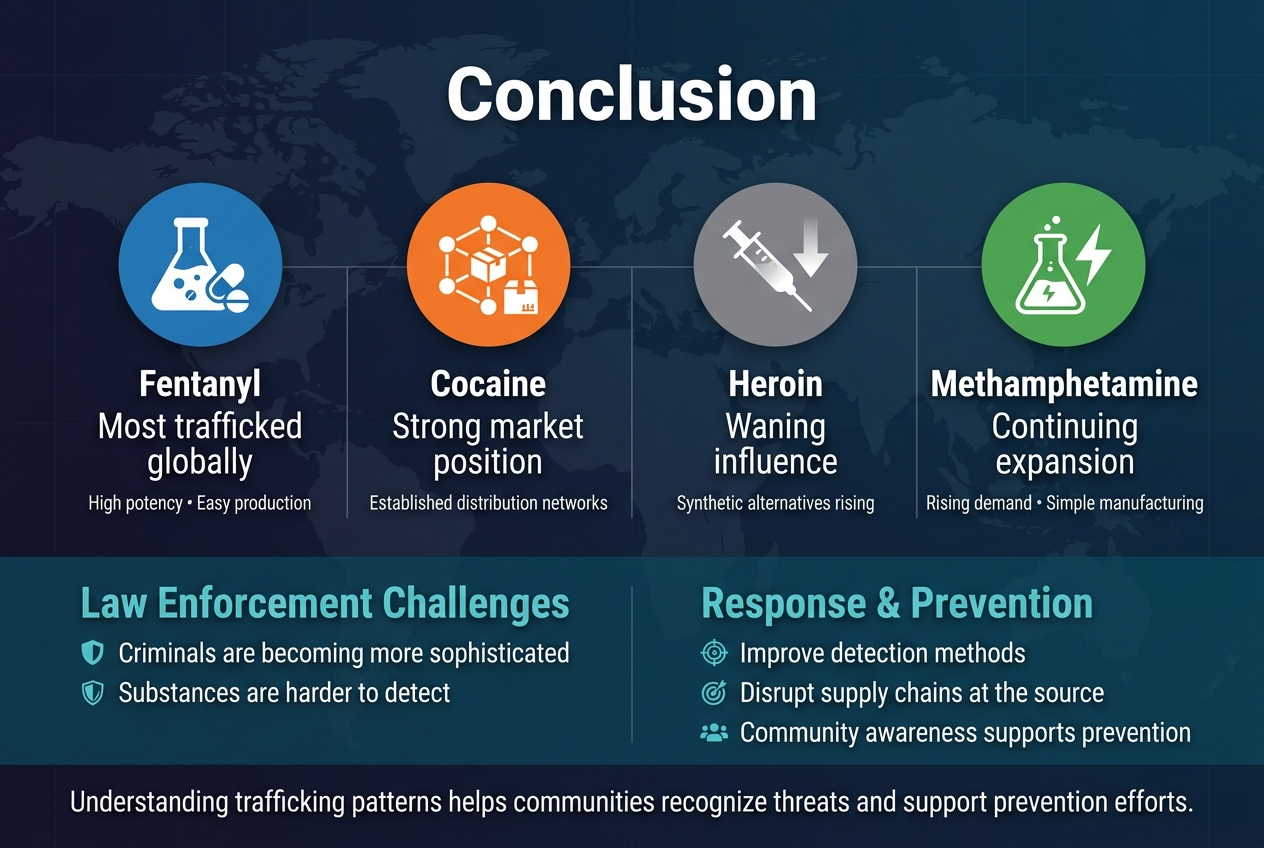
Drug trafficking continues to evolve as criminal networks adapt to market demands and law enforcement tactics. Fentanyl has emerged as the most trafficked substance globally, driven by its potency and ease of production, while traditional drugs like cocaine maintain strong market positions through established distribution networks. Heroin’s influence is waning as synthetic alternatives take over, and methamphetamine trafficking keeps expanding due to rising demand and relatively simple manufacturing processes.
The fight against drug trafficking faces mounting challenges as criminals become more sophisticated and substances become harder to detect. Law enforcement agencies must stay ahead of these trends by improving detection methods and disrupting supply chains at their source. Understanding these trafficking patterns helps communities recognize threats and support prevention efforts that can make a real difference in the ongoing battle against illegal drug distribution.