10 Books About Addiction And Recovery To Read In 2026
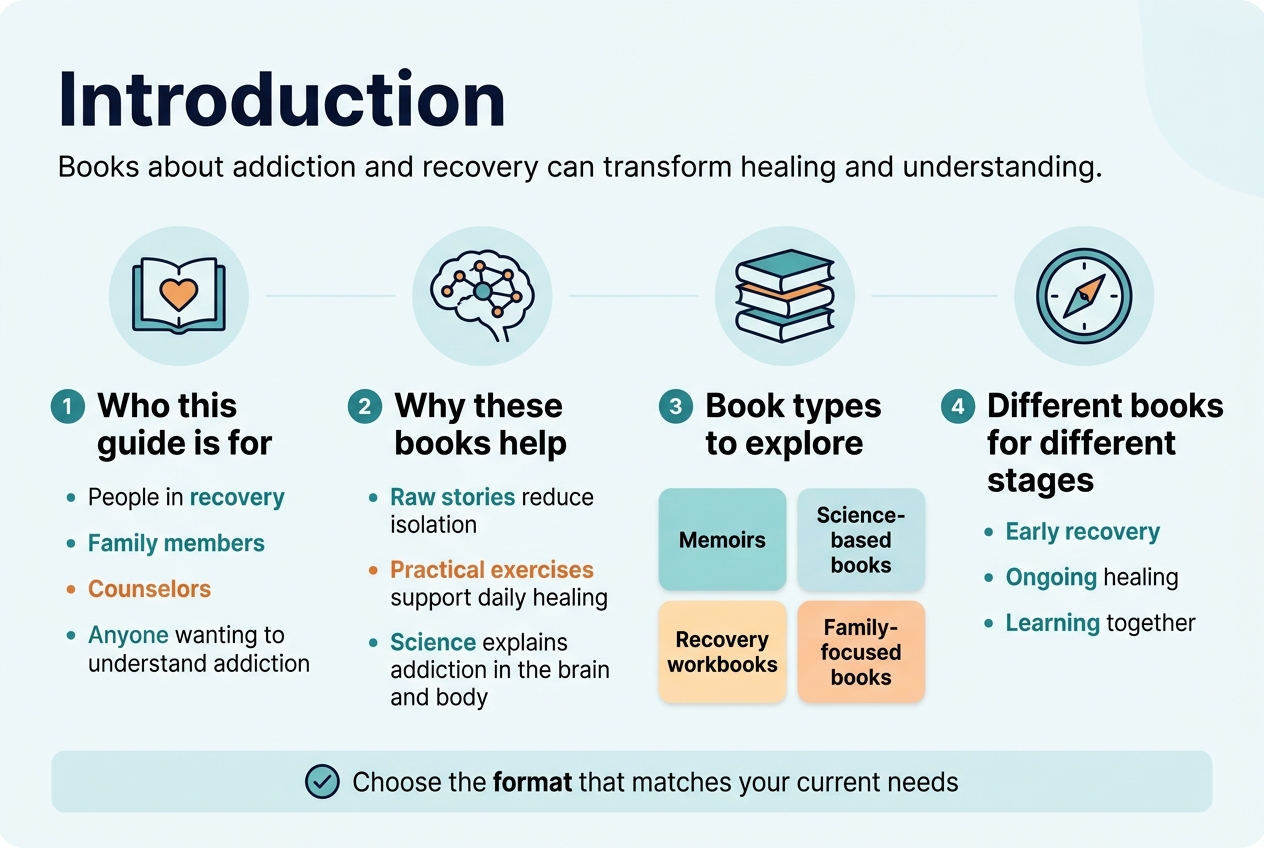
Finding the right books about addiction and recovery can transform your healing journey and deepen your understanding of this complex struggle. This guide is for anyone touched by addiction – people in recovery, family members seeking answers, counselors expanding their knowledge, or anyone wanting to understand addiction better.
Addiction recovery books offer different perspectives and tools for different stages of healing. Some share raw, honest stories that help you feel less alone, while others provide practical exercises to work through day by day. The science behind addiction has exploded in recent years, giving us clearer pictures of how addiction works in the brain and body.
We’ll explore powerful addiction recovery memoirs that reshape how you think about addiction, plus science-based books that break down the latest research in plain language. You’ll also discover recovery workbooks packed with hands-on exercises and books designed specifically for families navigating this challenge together. Each type serves a different purpose in recovery, and knowing which matches your current needs makes all the difference.
Memoirs That Transform Your Understanding of Addiction
Raw Personal Stories That Break Down Stigma
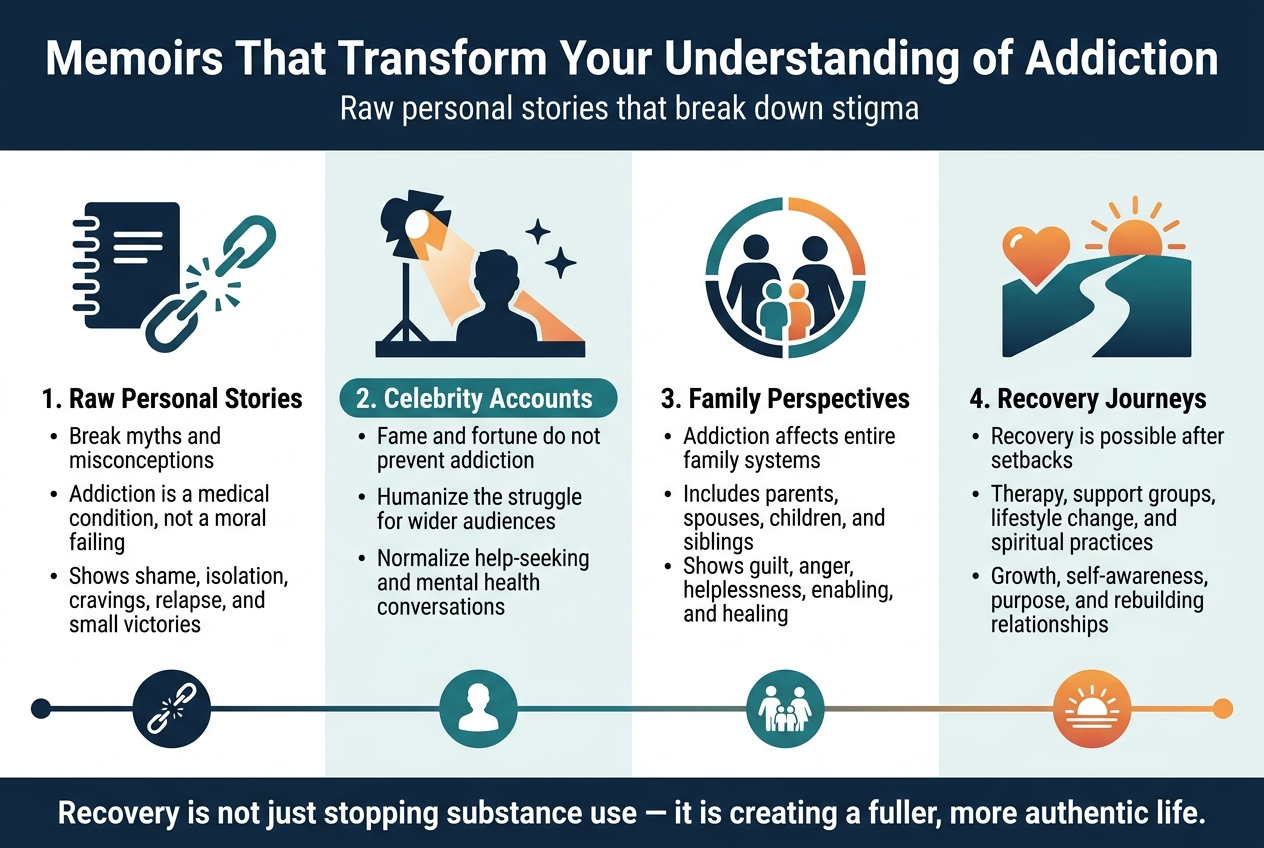
Personal accounts from people who have walked through addiction’s darkest valleys offer readers an unfiltered look at what recovery really means. These best addiction memoirs strip away the myths and misconceptions that society often holds about substance abuse. Books like “Beautiful Boy” by David Sheff and “Blackout” by Sarah Hepola show addiction as a complex medical condition rather than a moral failing.
Authors who share their raw experiences help readers understand that addiction doesn’t discriminate based on intelligence, education, or social status. These stories reveal the internal battles, the daily struggles, and the small victories that mark the recovery journey. When someone reads about a successful businesswoman’s hidden drinking problem or a college student’s descent into prescription drug abuse, they begin to see addiction as a human experience rather than a character flaw.
These memoirs also highlight the shame and isolation that often accompany addiction. By sharing their stories openly, authors create space for others to feel less alone in their struggles. Readers discover that their experiences with cravings, relapses, and the constant mental negotiations around substance use are shared by countless others.
Celebrity Accounts That Humanize the Struggle
Celebrity memoirs about addiction serve a unique purpose in breaking down barriers between the famous and everyday people struggling with substance abuse. Stars like Matthew Perry, Russell Brand, and Mackenzie Phillips have written detailed accounts of their battles with addiction, showing that fame and fortune don’t protect anyone from these challenges.
These high-profile stories reach audiences who might not typically pick up addiction recovery books. When someone reads about their favorite actor’s struggle with prescription painkillers or a musician’s battle with alcoholism, they often feel more comfortable examining their own relationship with substances. Celebrity accounts normalize seeking help and talking openly about mental health and addiction issues.
What makes these stories particularly powerful is how they reveal the pressures and triggers that can exist in any environment. The stress, trauma, and emotional pain that fuel addiction are universal human experiences, whether you’re dealing with Hollywood pressures or everyday life challenges.
Family Perspectives on Living with Addiction
Books for families of addicts provide essential insights into how addiction affects entire family systems. These memoirs come from parents, spouses, children, and siblings who have watched loved ones struggle with substance abuse. Books like “Addict in the Family” by Beverly Conyers and “It’s Not About the Drugs” by Judith Landau offer perspectives that are often overlooked in addiction literature.
These family narratives help readers understand the complexity of loving someone with an addiction. They explore the guilt, anger, and helplessness that family members experience, along with the difficult decisions about when to help and when to step back. These stories show how families can unknowingly enable addiction while trying to help, and how they can learn healthier ways to support their loved ones.
Parents writing about their children’s addiction often share the heartbreak of watching someone they love disappear into substance abuse. Spouses describe the erosion of trust and intimacy. Adult children of addicted parents reveal how addiction shaped their childhood and continues to affect their relationships. These perspectives provide valuable context for understanding addiction as a family disease.
Recovery Journeys That Inspire Hope
Recovery memoirs that focus on the healing process rather than just the depths of addiction serve as powerful sources of motivation. These addiction recovery books show readers that recovery is possible, even after multiple failed attempts or rock-bottom experiences. Authors like Anne Lamott, Tommy Rosen, and William Cope Moyers share their ongoing recovery journeys with honesty about both the challenges and the rewards.
These books often detail the practical steps that led to successful recovery, including therapy approaches, support groups, lifestyle changes, and spiritual practices. Readers get to see how different people have built sustainable recovery programs that work for their unique circumstances and personalities.
What sets these recovery-focused memoirs apart is their emphasis on growth and transformation. They show how people in recovery often become more self-aware, compassionate, and purposeful than they ever were before their addiction. These stories demonstrate that recovery isn’t just about stopping substance use – it’s about creating a fuller, more authentic life.
The authors frequently discuss how they rebuilt relationships, found new careers, developed hobbies, and discovered meaning in helping others. These narratives provide a roadmap for what recovery can look like beyond the early stages of sobriety.
Science-Based Books That Explain Addiction Mechanisms
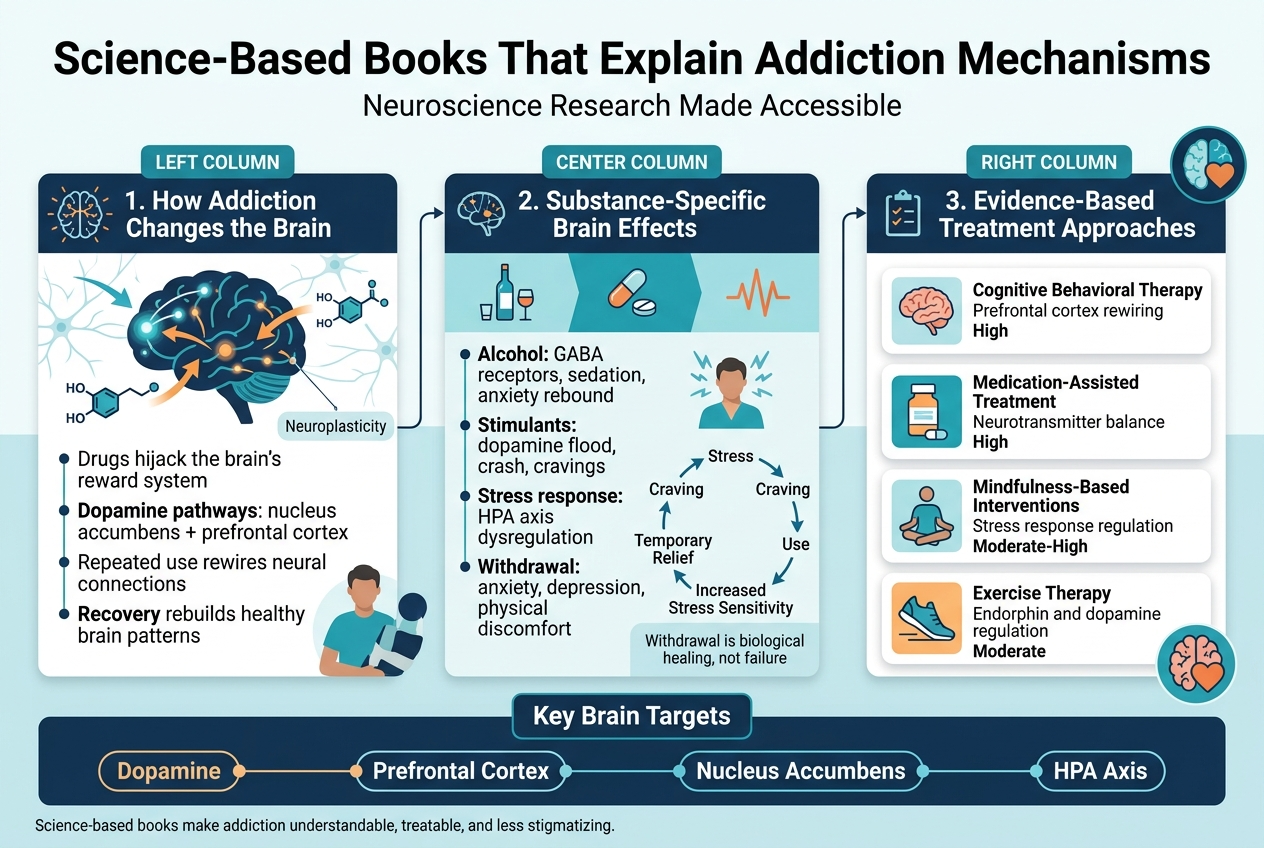
Neuroscience Research Made Accessible
The brain’s response to addictive substances involves complex neural pathways that researchers have been mapping for decades. Addiction science books break down these intricate processes into understandable concepts for readers seeking deeper knowledge about what happens during substance use and dependency.
Modern neuroscience reveals how drugs hijack the brain’s reward system, particularly affecting dopamine pathways in the nucleus accumbens and prefrontal cortex. Books like “The Biology of Desire” by Marc Lewis explain how repeated substance use literally rewires neural connections, making recovery a process of rebuilding healthy brain patterns rather than simply exercising willpower.
These science-focused texts often feature brain imaging studies showing structural changes in individuals with substance use disorders. They demonstrate how addiction affects decision-making, impulse control, and emotional regulation centers. Readers gain insight into why certain medications work in treatment and how the brain’s neuroplasticity allows for healing over time.
Understanding the Brain’s Response to Substances
Different substances create unique patterns of brain activation and dependency. Alcohol affects GABA receptors, creating sedation and anxiety rebound, while stimulants flood dopamine receptors, leading to crashes and cravings. Books about addiction and recovery that focus on neuroscience help readers understand these substance-specific mechanisms.
The stress response system plays a crucial role in addiction development. When people use substances to cope with stress, the hypothalamic-pituitary-adrenal axis becomes dysregulated. This creates a cycle where stress triggers craving, substance use temporarily relieves stress, but ultimately increases stress sensitivity.
Withdrawal symptoms reflect the brain’s attempt to regain balance after substance removal. Books explaining these processes help readers recognize withdrawal as a biological healing process rather than personal failure. Understanding that symptoms like anxiety, depression, and physical discomfort represent neural adaptation can reduce shame and increase treatment compliance.
Evidence-Based Treatment Approaches
Scientific research has identified specific interventions that effectively support recovery by targeting brain mechanisms underlying addiction. Cognitive-behavioral therapy works by retraining thought patterns and building new neural pathways that support healthy decision-making. Addiction recovery books grounded in research explain how these therapeutic approaches create lasting brain changes.
Medication-assisted treatment represents another evidence-based approach detailed in scientific literature. Books covering this topic explain how medications like buprenorphine, methadone, and naltrexone work at the neurochemical level to reduce cravings and prevent relapse. They address common misconceptions about substituting one drug for another, clarifying how these medications restore brain chemistry balance.
Mindfulness and meditation practices have gained scientific support for their ability to strengthen prefrontal cortex function and reduce stress reactivity. Research-based books explore how regular meditation practice increases gray matter density in areas responsible for self-control and emotional regulation. These findings provide concrete evidence for incorporating contemplative practices into addiction recovery resources.
| Treatment Approach | Brain Target | Evidence Level |
|---|---|---|
| Cognitive Behavioral Therapy | Prefrontal cortex rewiring | High |
| Medication-Assisted Treatment | Neurotransmitter balance | High |
| Mindfulness-Based Interventions | Stress response regulation | Moderate-High |
| Exercise Therapy | Endorphin and dopamine regulation | Moderate |
Recovery Workbooks for Active Healing
Step-by-Step Exercises for Daily Progress
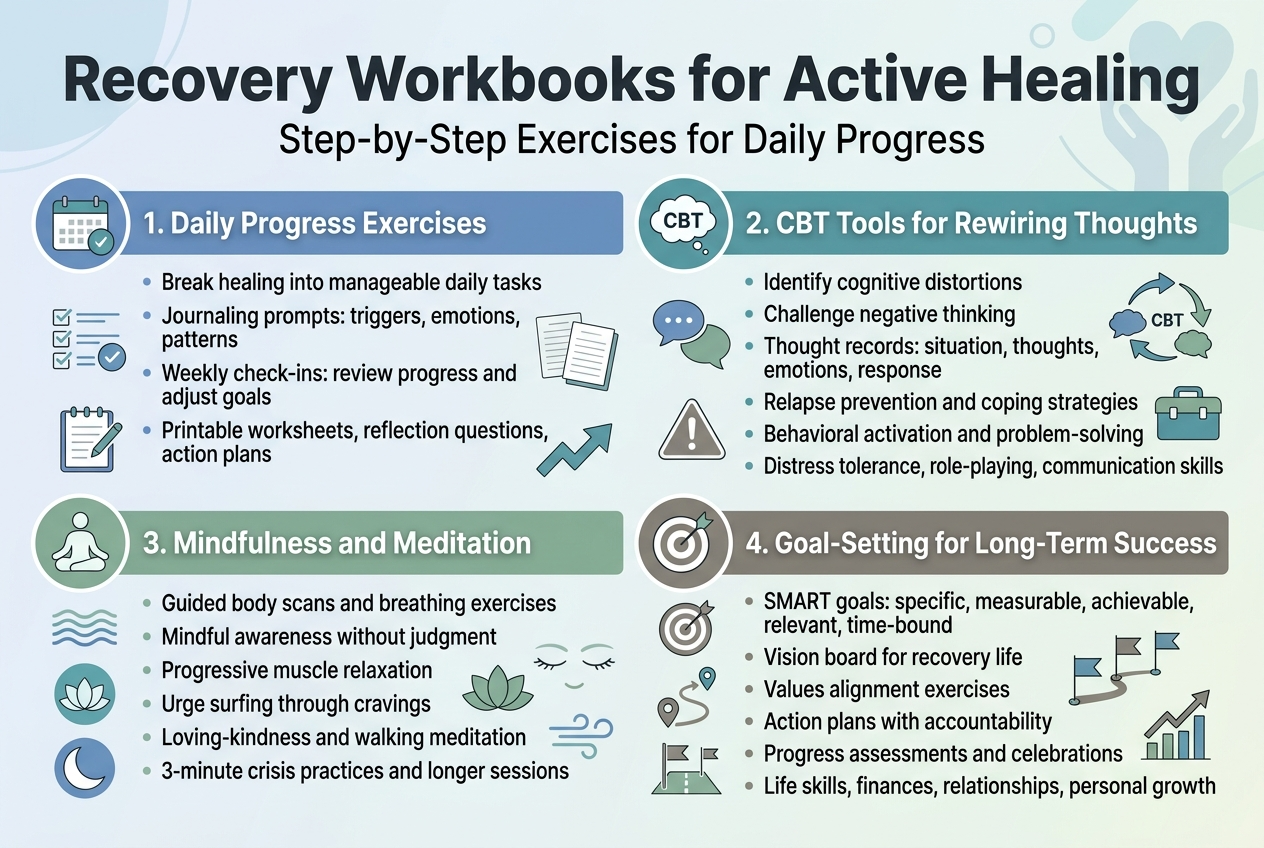
Recovery workbooks excel at breaking down overwhelming healing processes into manageable daily tasks. These books typically feature structured exercises that progress from basic awareness-building to advanced coping strategies. Daily journaling prompts help readers track triggers, emotions, and behavioral patterns while building self-awareness. Many workbooks include weekly check-ins where you evaluate progress and adjust goals. The most effective recovery workbooks provide printable worksheets, reflection questions, and action plans that transform abstract recovery concepts into concrete steps.
Popular workbooks like “The Recovery Book” by Al J. Mooney offer 30-day programs with specific exercises for each stage of recovery. These might include morning intention-setting, evening gratitude practices, and mid-day check-ins that help maintain sobriety momentum. The step-by-step approach prevents overwhelm while ensuring consistent progress toward recovery goals.
Cognitive Behavioral Tools You Can Apply
Recovery workbooks grounded in cognitive behavioral therapy (CBT) provide practical tools for rewiring thought patterns that contribute to addictive behaviors. These resources teach readers to identify cognitive distortions, challenge negative thinking, and develop healthier mental habits. Thought records become powerful exercises where you document triggering situations, automatic thoughts, emotions, and behavioral responses.
Many CBT-based recovery workbooks include relapse prevention planning, teaching readers to recognize early warning signs and implement coping strategies before cravings become overwhelming. Behavioral activation techniques help readers schedule rewarding activities that replace substance use. Problem-solving worksheets guide users through decision-making processes when facing high-risk situations.
These workbooks often feature exercises for developing distress tolerance skills, helping readers sit with uncomfortable emotions without turning to substances. Role-playing scenarios and communication skill-building exercises prepare individuals for challenging social situations in recovery.
Mindfulness and Meditation Practices
Mindfulness-based recovery workbooks integrate meditation practices specifically designed for addiction recovery. These resources typically include guided body scans, breathing exercises, and mindful awareness techniques that help readers observe cravings without judgment. Progressive muscle relaxation scripts provide tools for managing physical tension and anxiety that often trigger substance use.
Many workbooks feature urge surfing techniques, teaching readers to ride out cravings like waves rather than fighting them. Loving-kindness meditations help heal shame and self-criticism common in early recovery. Walking meditation instructions offer active mindfulness practices for those who struggle with sitting still.
Audio components often accompany these workbooks, providing guided meditations of varying lengths to accommodate busy schedules. Brief three-minute practices work well for crisis moments, while longer sessions support deeper healing work.
Goal-Setting Frameworks for Long-Term Success
Effective recovery workbooks provide structured frameworks for setting and achieving meaningful goals beyond just staying sober. SMART goal-setting templates help readers create specific, measurable, achievable, relevant, and time-bound objectives for career, relationships, health, and personal growth. Vision board exercises encourage readers to visualize their ideal recovery life, creating motivation for difficult days.
Many workbooks include value identification exercises that help align recovery goals with personal core values. Action planning worksheets break large goals into smaller, manageable steps with accountability measures built in. Regular progress assessments help readers celebrate victories and adjust strategies when needed.
Long-term success frameworks often incorporate life skills development, financial planning, and relationship building goals that create a comprehensive foundation for sustained recovery.
Books for Family Members and Loved Ones
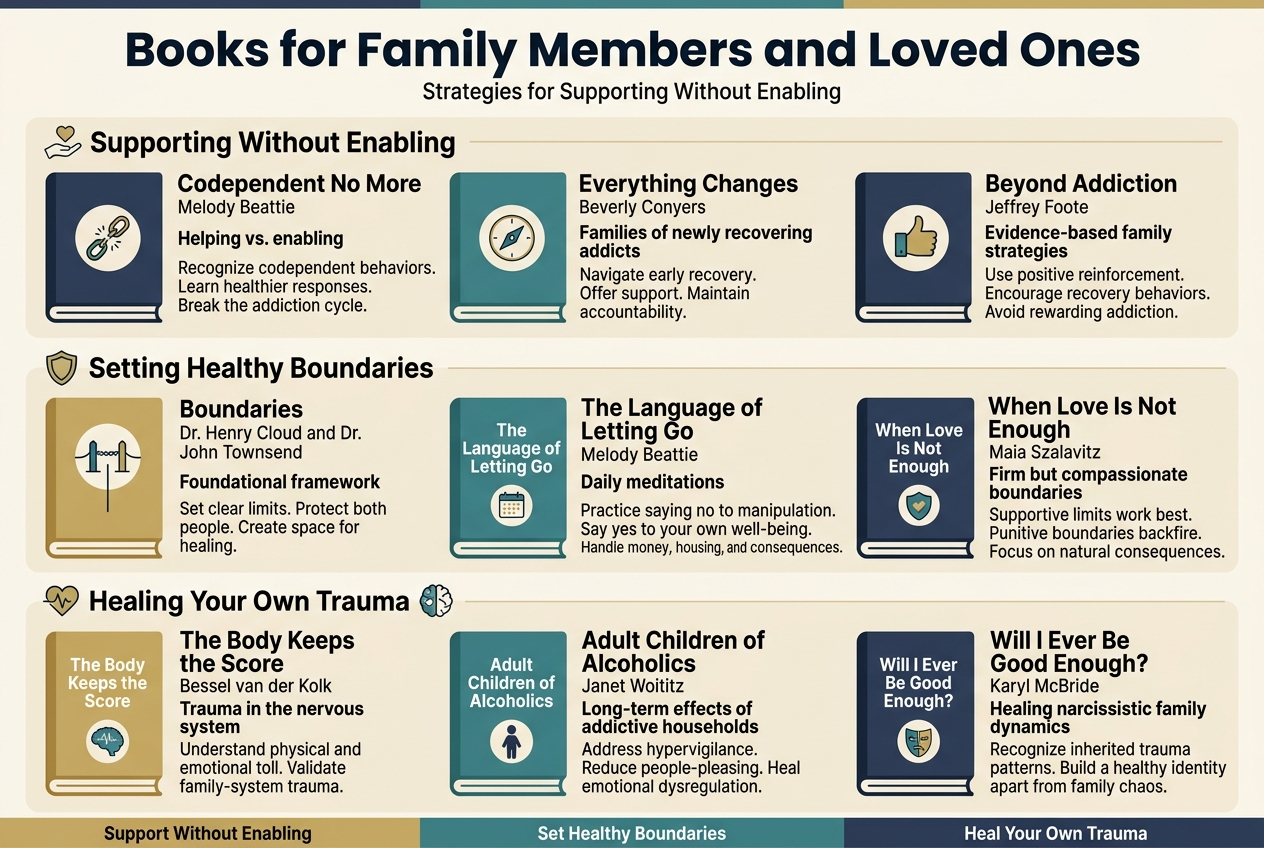
Strategies for Supporting Without Enabling
“Codependent No More” by Melody Beattie remains one of the most transformative books for families of addicts available today. Beattie masterfully explains the difference between helping and enabling, showing readers how their well-intentioned actions often fuel the addiction cycle. The book provides practical exercises for recognizing codependent behaviors and developing healthier responses.
“Everything Changes: Help for Families of Newly Recovering Addicts” by Beverly Conyers offers specific guidance for navigating the early stages of recovery. Conyers addresses the confusion many families feel when their loved one gets sober but family dynamics remain strained. She teaches readers how to offer emotional support while maintaining expectations for accountability.
“Beyond Addiction” by Jeffrey Foote presents evidence-based strategies that move beyond traditional confrontational approaches. This addiction recovery resource emphasizes positive reinforcement techniques and helps families create environments that naturally encourage recovery behaviors rather than inadvertently rewarding addictive ones.
Setting Healthy Boundaries During Recovery
“Boundaries” by Dr. Henry Cloud and Dr. John Townsend provides the foundational framework for establishing limits with addicted family members. The authors explain how boundaries protect both the family member and the person in recovery, creating space for genuine healing to occur.
“The Language of Letting Go” by Melody Beattie offers daily meditations specifically designed for families dealing with addiction. Each entry focuses on practical boundary-setting scenarios, helping readers practice saying no to manipulation while saying yes to their own emotional well-being. The book addresses common situations like lending money, providing housing, or covering consequences of addictive behaviors.
“When Love Is Not Enough” by Maia Szalavitz challenges traditional tough love approaches and provides research-backed alternatives for setting firm but compassionate boundaries. Szalavitz shows how punitive boundaries often backfire, while supportive limits that focus on natural consequences prove more effective.
Healing Your Own Trauma from Addiction Impact
“The Body Keeps the Score” by Bessel van der Kolk helps family members understand how living with addiction creates trauma responses in their own nervous systems. Van der Kolk’s work validates the physical and emotional toll that addiction takes on entire family systems, not just the person using substances.
“Adult Children of Alcoholics” by Janet Woititz addresses the long-term effects of growing up in addictive households. Even decades later, adult children carry patterns of hypervigilance, people-pleasing, and emotional dysregulation that require intentional healing work.
“Will I Ever Be Good Enough?” by Karyl McBride focuses specifically on healing from narcissistic family dynamics that often accompany addiction. McBride provides clear steps for recognizing inherited trauma patterns and developing a separate, healthy identity apart from family chaos.
Professional Resources for Counselors and Therapists
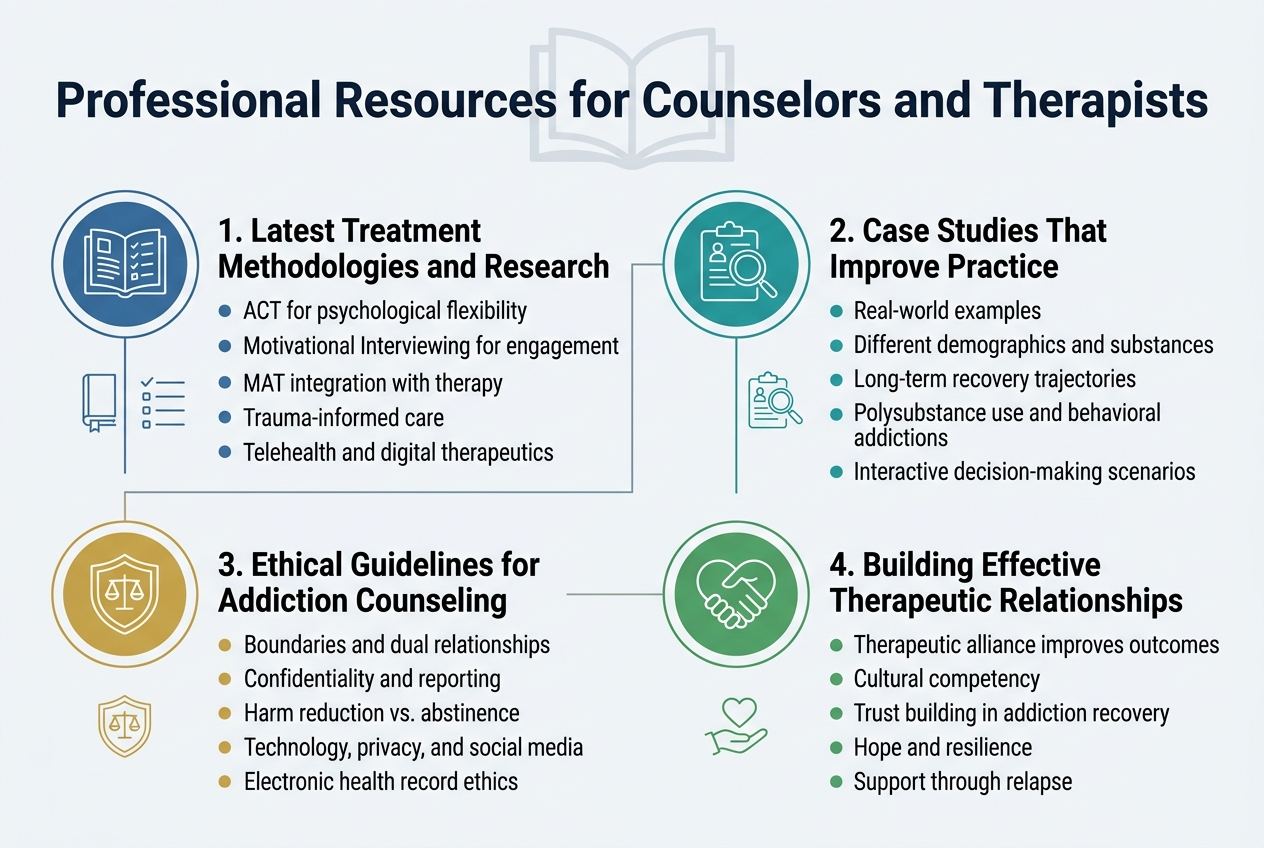
Latest Treatment Methodologies and Research
The field of addiction counseling evolves rapidly, making staying current with addiction counseling books essential for effective practice. Recent publications highlight evidence-based approaches like Acceptance and Commitment Therapy (ACT), which helps clients develop psychological flexibility while managing cravings and triggers. Motivational Interviewing techniques continue to advance, with new research showing how specific questioning strategies can dramatically improve client engagement rates.
Medication-Assisted Treatment (MAT) protocols have transformed significantly, and current professional resources detail how to integrate these medical interventions with therapeutic support. Books addressing trauma-informed care recognize that up to 90% of people seeking addiction treatment have experienced significant trauma, fundamentally changing how practitioners approach initial assessments and ongoing therapy.
Digital therapeutics and telehealth adaptations represent another frontier covered in contemporary professional literature. These resources explain how to maintain therapeutic boundaries and effectiveness when conducting sessions remotely, especially relevant since the pandemic reshaped treatment delivery models.
Case Studies That Improve Practice
Real-world case studies provide invaluable learning opportunities that textbook theories can’t match. Professional addiction recovery books featuring detailed case presentations help counselors recognize patterns, understand treatment failures, and identify successful intervention strategies. These resources typically include cases across different demographics, substance types, and co-occurring disorders.
Particularly valuable are case studies that document long-term recovery trajectories, showing how treatment decisions made early in recovery affect outcomes years later. Many professional resources now include cases that address polysubstance use, behavioral addictions, and complex trauma presentations that practitioners increasingly encounter.
Interactive case study books allow readers to work through decision-making processes before revealing outcomes, building clinical reasoning skills. Some publications include video components or QR codes linking to additional materials, creating immersive learning experiences that stick with practitioners longer than traditional reading alone.
Ethical Guidelines for Addiction Counseling
Professional boundaries become particularly complex in addiction counseling, where clients may attempt manipulation, and counselors might share personal recovery experiences. Current ethical resources address these gray areas with practical guidance rather than abstract principles. Dual relationships, confidentiality limits, and mandatory reporting requirements receive detailed treatment in specialized addiction recovery resources.
Recent publications examine ethical dilemmas around harm reduction versus abstinence-based treatment goals, especially when client and family preferences conflict. These resources help practitioners navigate situations where traditional ethical frameworks don’t provide clear answers.
Technology introduces new ethical considerations covered in updated professional literature. Issues around data privacy in recovery apps, social media boundaries, and electronic health records require fresh ethical frameworks that specialized books now address comprehensively.
Building Effective Therapeutic Relationships
The therapeutic alliance predicts treatment outcomes more strongly than specific techniques used, making relationship-building skills crucial for addiction counselors. Professional resources focus on how addiction affects trust formation and what modifications counselors need to make in their typical relationship-building approaches.
Books addressing cultural competency help practitioners work effectively with diverse populations, recognizing that addiction experiences and recovery paths vary significantly across different cultural backgrounds. These resources go beyond surface-level cultural awareness to provide practical strategies for adapting treatment approaches while maintaining therapeutic effectiveness.
Recent publications emphasize the importance of hope and resilience-building in therapeutic relationships. They provide specific techniques for helping clients envision recovery possibilities when they feel hopeless, and strategies for maintaining counselor optimism even when working with clients who relapse repeatedly.
Books Addressing Specific Types of Addiction
Substance-Specific Recovery Approaches
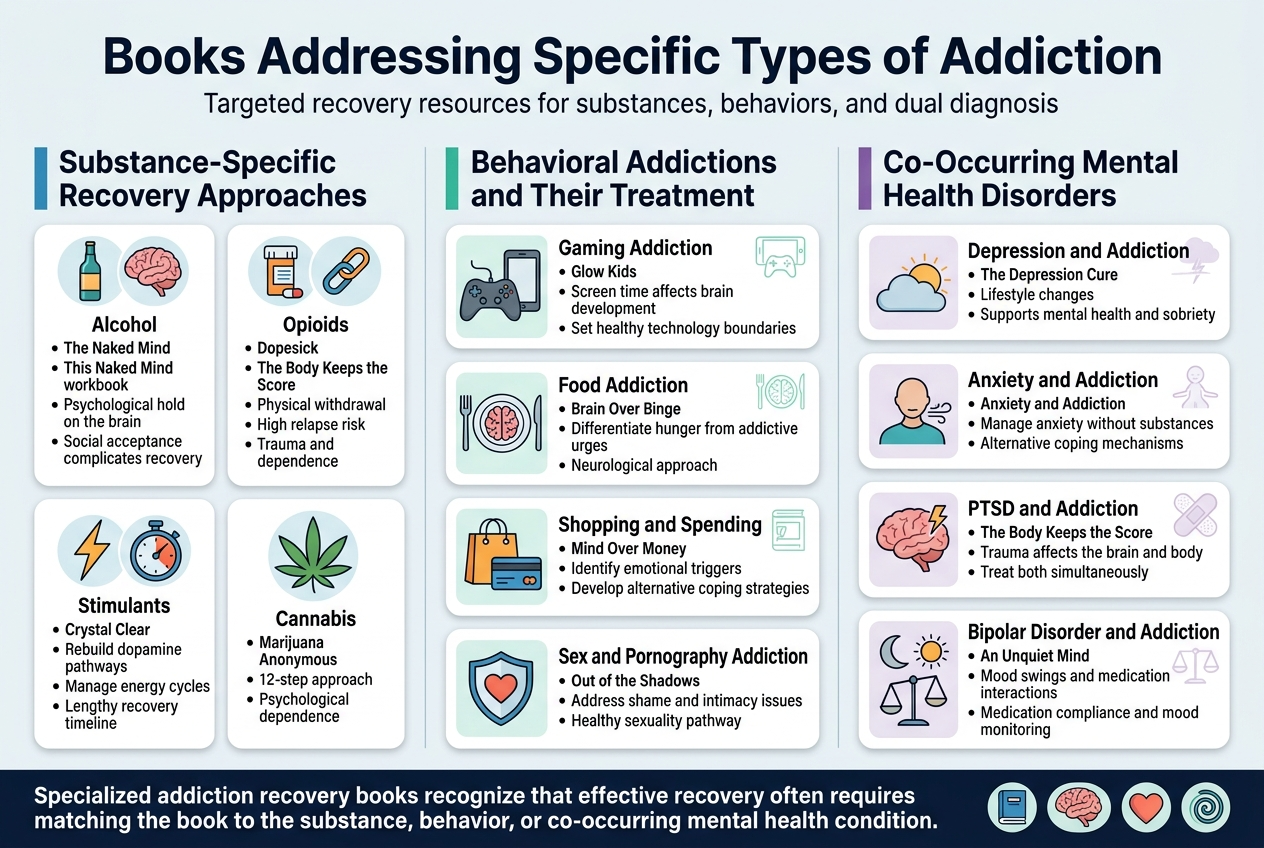
Different substances create unique patterns of dependence, which means recovery strategies need to be tailored accordingly. Substance abuse recovery books that focus on specific drugs or alcohol provide targeted insights that generic addiction recovery resources often miss.
For alcohol addiction, books like “The Naked Mind” by Annie Grace break down the psychological hold that alcohol has on the brain, while “This Naked Mind” workbook offers practical exercises for rewiring thought patterns. These books about addiction and recovery specifically address alcohol’s social acceptance and how this complicates recovery.
Opioid addiction requires specialized understanding due to its physical withdrawal symptoms and high relapse rates. “Dopesick” by Beth Macy combines investigative journalism with personal stories to reveal the opioid crisis’s complexity. For those in recovery, “The Body Keeps the Score” provides valuable insights into trauma’s role in opioid dependence.
Stimulant addiction recovery books focus on rebuilding dopamine pathways and managing energy cycles. “Crystal Clear” by Tina Tessina offers specific strategies for methamphetamine recovery, addressing the unique challenges of stimulant withdrawal and the lengthy recovery timeline.
Cannabis-specific addiction recovery books acknowledge that while marijuana dependence might seem less severe, the psychological dependence can be profound. “Marijuana Anonymous” provides a 12-step approach adapted specifically for cannabis users, recognizing the unique aspects of this substance’s hold on users.
Behavioral Addictions and Their Treatment
Behavioral addictions activate the same reward pathways as substance addictions, but treating them requires different strategies since complete abstinence isn’t always possible or practical. These addiction recovery resources address the growing recognition of behavioral addictions as serious mental health concerns.
Gaming addiction has exploded with digital technology’s advancement. “Glow Kids” by Nicholas Kardaras examines how screen time affects brain development and offers practical strategies for breaking gaming compulsions. The book provides parents and individuals with concrete steps to create healthy boundaries with technology.
Food addiction recovery books acknowledge the complexity of using food as a coping mechanism while still needing to eat for survival. “Brain Over Binge” by Kathryn Hansen offers a neurological approach to understanding binge eating, helping readers distinguish between biological hunger and addictive urges.
Shopping and spending addiction books like “Mind Over Money” address the emotional triggers that drive compulsive buying. These resources help readers identify the psychological void they’re trying to fill through purchases and develop alternative coping strategies.
Sex and pornography addiction recovery requires specialized approaches that address shame, relationship dynamics, and intimacy issues. “Out of the Shadows” by Patrick Carnes remains a foundational text that helps individuals understand sexual addiction’s cycles and provides a pathway toward healthy sexuality.
Co-Occurring Mental Health Disorders
Many people struggling with addiction also face mental health challenges like depression, anxiety, PTSD, or bipolar disorder. Books about addiction and recovery that address dual diagnosis provide crucial insights for comprehensive healing.
Depression and addiction often feed each other in destructive cycles. “The Depression Cure” by Stephen Ilardi offers natural approaches to managing depression that complement addiction recovery, including lifestyle changes that support both mental health and sobriety.
Anxiety disorders frequently co-occur with substance abuse as people self-medicate their symptoms. “Anxiety and Addiction” by Lisa Merlo provides practical strategies for managing anxiety without substances, offering alternative coping mechanisms that don’t interfere with recovery goals.
PTSD and addiction require specialized treatment approaches since trauma often underlies addictive behaviors. “The Body Keeps the Score” by Bessel van der Kolk explains how trauma affects the brain and body, providing recovery strategies that address both PTSD symptoms and addictive patterns simultaneously.
Bipolar disorder presents unique challenges in addiction recovery due to mood swings and medication interactions. “An Unquiet Mind” by Kay Redfield Jamison offers personal insights into managing bipolar disorder while maintaining sobriety, emphasizing the importance of medication compliance and mood monitoring.
These specialized addiction recovery books recognize that treating addiction without addressing underlying mental health conditions often leads to relapse, making dual-diagnosis resources essential for long-term recovery success.
Spiritual and Holistic Approaches to Recovery
Faith-Based Recovery Programs and Philosophies
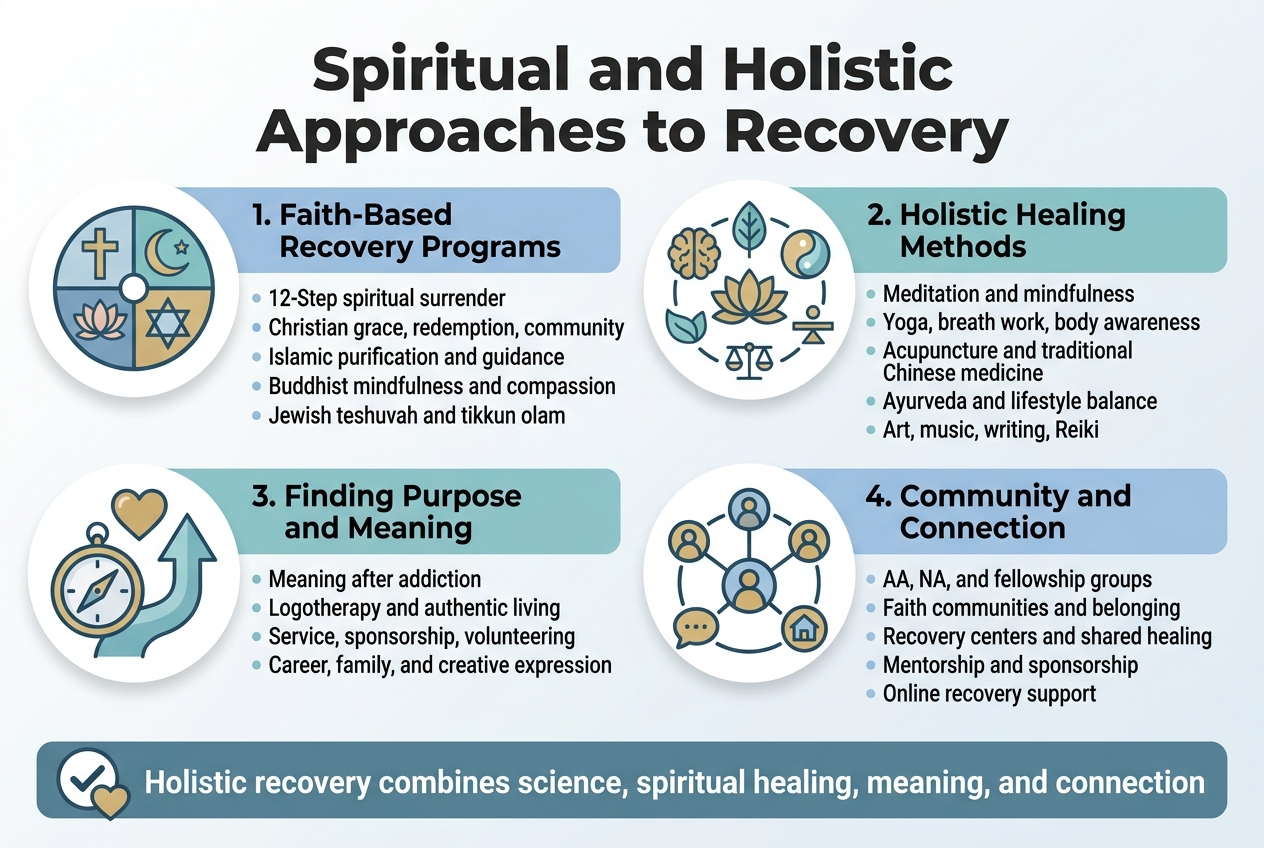
Recovery programs rooted in faith traditions offer powerful frameworks for healing that address the spiritual emptiness many people in addiction experience. The 12-step model, originally developed by Alcoholics Anonymous, incorporates spiritual principles that encourage surrendering to a higher power and finding strength beyond oneself. Spiritual recovery books explore how various religious and faith-based approaches can anchor the recovery process in something greater than willpower alone.
Christian recovery programs emphasize redemption, forgiveness, and the transformative power of grace. Books like “Celebrate Recovery” by John Baker provide biblical foundations for overcoming addictive behaviors while building community within faith-based settings. Islamic recovery approaches focus on spiritual purification and returning to Allah’s guidance, while Buddhist-inspired programs emphasize mindfulness, compassion, and breaking the cycle of suffering that addiction creates.
Jewish recovery traditions incorporate concepts of teshuvah (repentance and return) and tikkun olam (repairing the world), showing how personal healing contributes to collective healing. These faith-based philosophies don’t just address the symptoms of addiction—they tackle the spiritual crisis underneath, offering hope, purpose, and connection to something eternal.
Alternative Healing Methods That Complement Traditional Treatment
Holistic recovery approaches recognize that addiction affects the whole person—mind, body, and spirit. Books about addiction and recovery increasingly highlight how alternative healing methods can enhance traditional treatment by addressing aspects that medical models sometimes miss.
Meditation and mindfulness practices help rewire the brain’s response patterns, creating space between triggers and reactions. Yoga combines physical movement with breath work and spiritual awareness, helping people reconnect with their bodies in healthy ways after years of substance abuse. Acupuncture and traditional Chinese medicine view addiction as an imbalance in the body’s energy systems, offering non-pharmaceutical ways to reduce cravings and support detoxification.
Ayurvedic approaches focus on individual constitution and lifestyle practices that restore natural balance. Art therapy, music therapy, and expressive writing help process emotions and trauma that often fuel addictive behaviors. Energy healing modalities like Reiki or healing touch address the spiritual and energetic disruptions that addiction creates.
These methods work best when integrated with evidence-based treatments rather than replacing them entirely. The combination creates a comprehensive approach that honors both the scientific understanding of addiction and the deeper human need for meaning, connection, and spiritual healing.
Finding Purpose and Meaning After Addiction
Recovery creates space for rediscovering life’s deeper meaning, but this process requires intentional cultivation. Many people in early recovery face an existential crisis—without substances to numb pain or provide artificial meaning, they must rebuild their sense of purpose from the ground up.
Addiction recovery books that address meaning-making often draw from Viktor Frankl’s logotherapy, which suggests that humans can endure almost any suffering if they find meaning in it. This perspective transforms the recovery journey from mere abstinence into a quest for authentic living and contribution.
Service to others becomes a powerful source of meaning for many in recovery. Sponsoring others, volunteering, or working in helping professions allows people to transform their pain into purpose. Creative expression—whether through art, music, writing, or other mediums—provides channels for processing experiences and contributing beauty to the world.
Career and educational pursuits take on new significance when approached from a recovery perspective. Rather than just earning money or achieving status, work becomes an opportunity to use talents in service of something meaningful. Family relationships often require rebuilding, but they can become sources of profound purpose as people learn to show up authentically for loved ones.
Spiritual practices help connect daily activities to larger purposes, whether that’s growing in compassion, serving God, or contributing to human flourishing.
Community and Connection in Spiritual Recovery
Isolation feeds addiction, while authentic connection nourishes recovery. Spiritual approaches to healing emphasize that recovery happens in relationship—with a higher power, with others on similar journeys, and with the broader community.
Fellowship groups like AA, NA, and their spiritual counterparts create spaces where people can share honestly without judgment. These communities understand that recovery is not a solo journey but a collective process where members support each other through challenges and celebrate victories together.
Faith communities can provide additional layers of support when they’re educated about addiction and recovery. Congregations that embrace people in recovery offer opportunities for service, spiritual growth, and belonging that extend beyond recovery-specific meetings.
Recovery centers that incorporate spiritual and holistic elements often create intentional communities where people live, work, and heal together. These environments model healthy relationships and provide practice grounds for the interpersonal skills that support long-term recovery.
Mentorship relationships—whether formal sponsorship or informal guidance—connect people with those further along in recovery who can share wisdom and hope. These connections combat the shame and isolation that addiction creates while providing tangible examples that recovery is possible.
Online communities and addiction recovery resources increasingly offer spiritual support for those who can’t access local fellowship or prefer digital connection. These platforms extend the reach of recovery community beyond geographic limitations.
How to Choose the Right Book for Your Recovery Stage
Books for Early Recovery and Detox
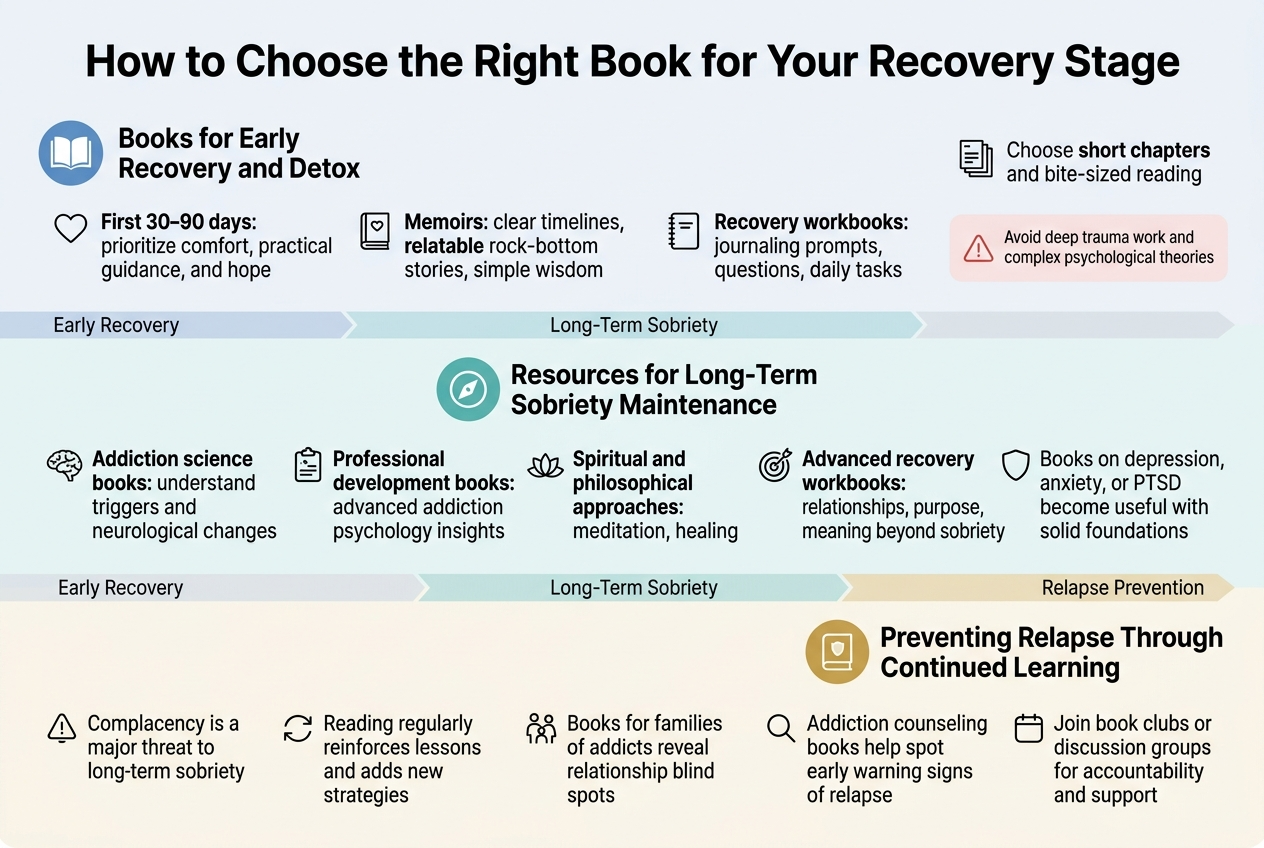
The first 30 to 90 days of recovery represent the most vulnerable period for anyone breaking free from addiction. Your brain is still healing, emotions feel raw, and cravings can hit like waves. Addiction recovery books during this phase should offer immediate comfort, practical guidance, and hope without overwhelming complexity.
Memoirs work exceptionally well for early recovery because they show you’re not alone. Reading about someone else’s rock bottom can provide the perspective shift you desperately need. Look for stories with clear timelines that demonstrate how life gradually improves. Avoid anything too technical or academic right now – your brain needs simple, digestible wisdom.
Recovery workbooks with daily exercises help structure your thoughts when everything feels chaotic. These books typically include journaling prompts, reflection questions, and small daily tasks that build healthy habits. The structure becomes an anchor when your routine feels completely upended.
Short chapters are your friend during early recovery. Your concentration might be scattered, making it difficult to absorb lengthy passages. Choose books that break information into bite-sized pieces you can read during brief moments of clarity.
Avoid books that dive deep into trauma work or complex psychological theories during your first few months. While these resources become valuable later, early recovery calls for stabilization and basic coping strategies rather than intensive exploration.
Resources for Long-Term Sobriety Maintenance
Once you’ve established several months or years of sobriety, your reading needs shift dramatically. Books about addiction and recovery for this stage can tackle more complex topics like rebuilding relationships, managing chronic stress, and developing a deeper understanding of your addiction patterns.
Addiction science books become particularly valuable during long-term recovery. Understanding the neurological changes that occurred during active addiction helps explain why certain situations still trigger intense responses years later. This knowledge reduces shame and provides logical explanations for ongoing challenges.
Professional development books written for counselors and therapists offer advanced insights into addiction psychology. These resources help you become your own advocate and develop sophisticated self-awareness tools.
Spiritual and philosophical approaches to recovery often resonate more deeply after you’ve established basic stability. Books exploring mindfulness, meditation, or religious perspectives on healing can add richness to your recovery practice.
Recovery workbooks designed for advanced stages focus on goals like building authentic relationships, developing life purpose, and creating meaning beyond sobriety. These exercises require the emotional stability that comes with sustained recovery time.
Books addressing co-occurring disorders like depression, anxiety, or PTSD become accessible once you have solid recovery foundations. Earlier in recovery, these topics might feel overwhelming, but with experience, they become essential tools for comprehensive healing.
Preventing Relapse Through Continued Learning
Complacency represents one of the biggest threats to long-term sobriety. Continued reading about addiction and recovery keeps your awareness sharp and provides fresh perspectives on familiar challenges. Addiction recovery resources serve as ongoing insurance policies against relapse.
Regular exposure to recovery literature reinforces the lessons you’ve learned and introduces new strategies. Even reading the same book at different stages of recovery reveals insights you missed previously. Your brain’s healing process continues for years, making you receptive to information that didn’t click earlier.
Books for families of addicts can deepen your understanding of how addiction affected your relationships, even if you’re reading them years into recovery. Understanding your family’s perspective often reveals blind spots in your own recovery process.
Professional addiction counseling books help you recognize early warning signs of relapse that you might otherwise dismiss. These resources teach you to identify subtle shifts in thinking patterns, emotional regulation, or behavior that precede actual substance use.
New research constantly emerges in addiction science, offering updated treatment approaches and recovery strategies. Staying current with addiction recovery books ensures you’re benefiting from the latest developments in the field.
Consider joining book clubs or discussion groups focused on recovery literature. Discussing these books with others adds accountability to your reading practice and creates opportunities for mutual support and shared insights.
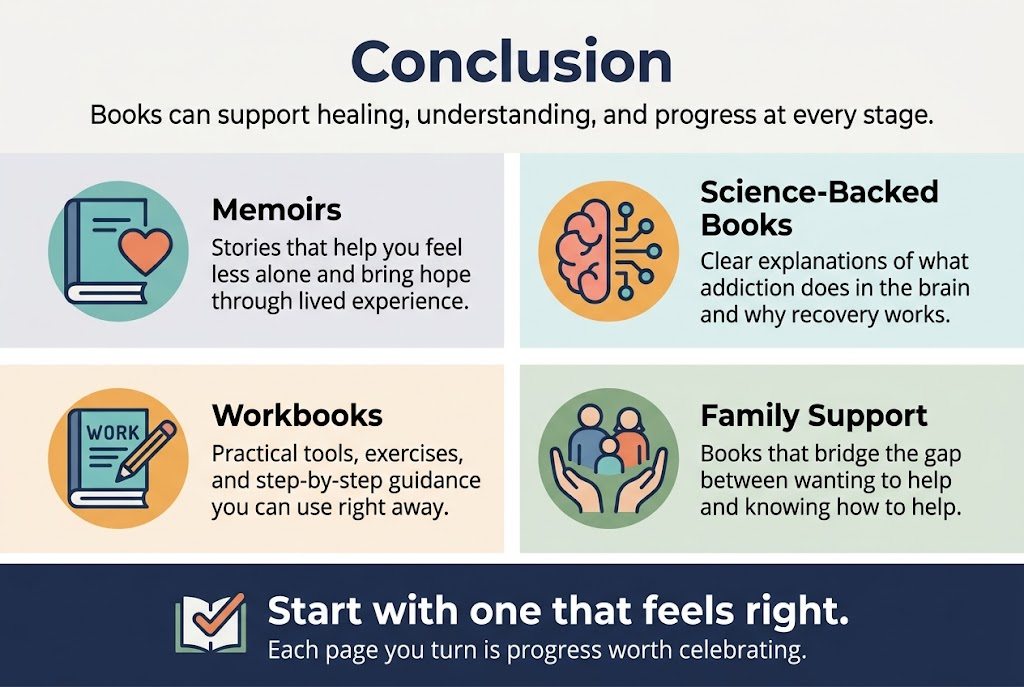
Reading about addiction and recovery can be a game-changer, whether you’re on your own journey or supporting someone else. From powerful memoirs that make you feel less alone to science-backed books that explain what’s really happening in the brain, these resources offer different paths to understanding and healing. The workbooks give you practical tools to work with, while books for families help bridge the gap between wanting to help and knowing how to actually do it.
The best part about having so many options is that you can find exactly what speaks to you right now. Maybe you need the hope that comes from reading someone else’s success story, or perhaps you’re ready to dig into the science behind addiction. Whatever stage you’re in, there’s a book out there that can meet you where you are and help you take the next step forward. Start with one that feels right, and remember that each page you turn is progress worth celebrating.