
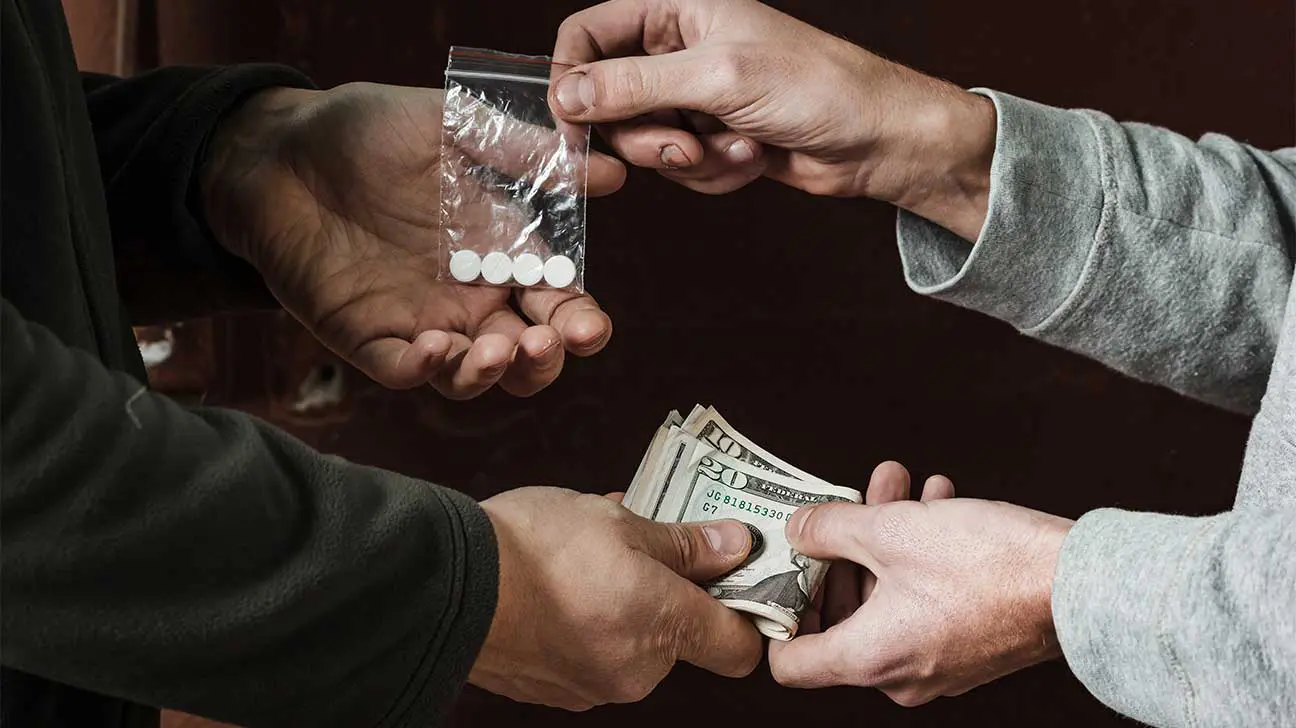
The Average Cost Of Illegal Street Drugs
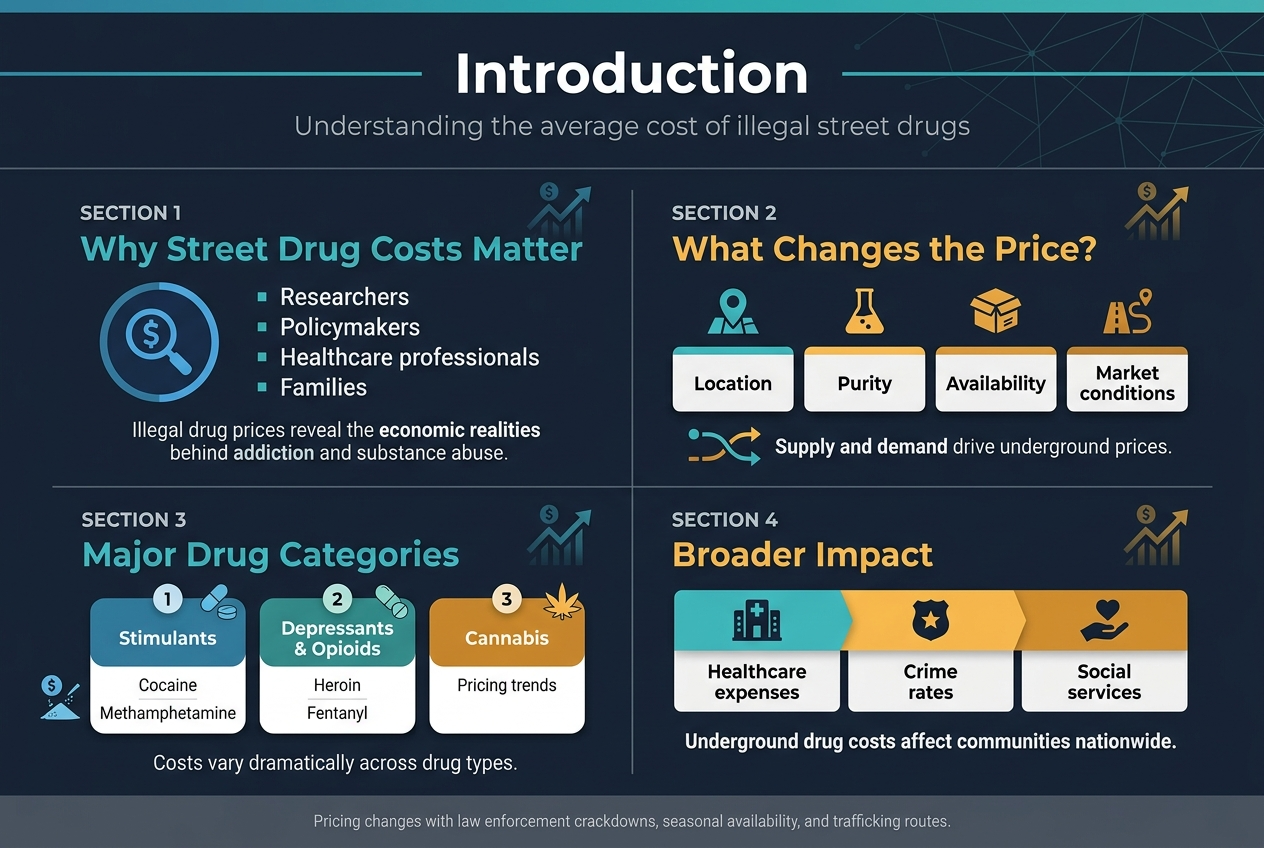
Understanding the average cost of illegal street drugs helps researchers, policymakers, healthcare professionals, and families grasp the economic realities behind addiction and substance abuse. Street drug costs vary dramatically based on location, purity, availability, and market conditions, making illegal drug prices a complex topic that affects communities nationwide.
Drug market pricing follows patterns similar to any underground economy, where supply and demand drive costs up or down. Factors like law enforcement crackdowns, seasonal availability, and trafficking routes all influence what people pay for illicit substance prices on the street.
This guide breaks down current narcotic pricing data across major drug categories. We’ll explore how stimulants like cocaine and methamphetamine compare in cost to depressants and opioids like heroin and fentanyl. You’ll also learn about cannabis pricing trends and how these underground drug costs impact both users and the broader economy through healthcare expenses, crime rates, and social services.
Understanding Drug Pricing Factors and Market Dynamics
Supply Chain Risks and Dealer Markup Calculations
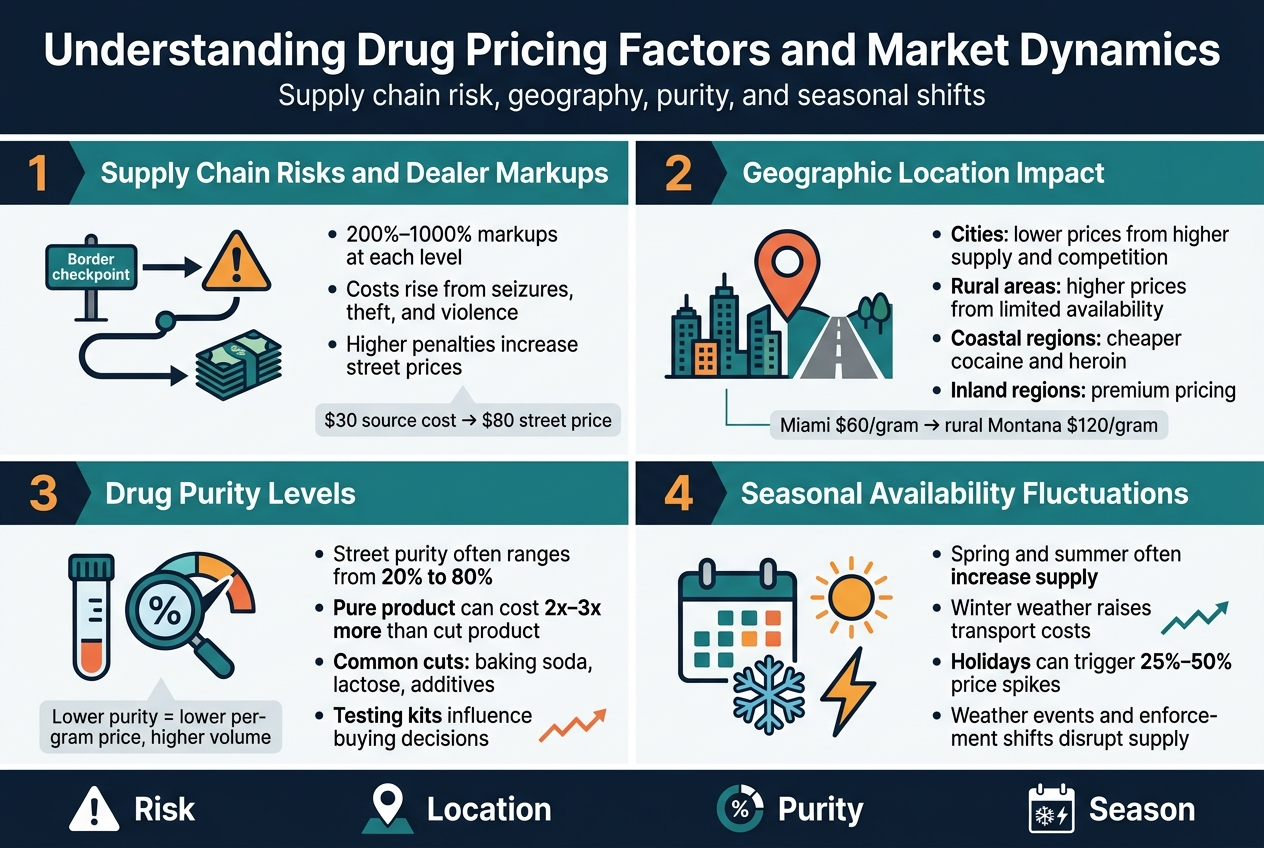
Street drug costs reflect the inherent risks throughout the illegal supply chain. Every person who handles the product – from international smugglers to local dealers – adds their markup to cover potential losses from law enforcement seizures, theft, and violence. These markups can range from 200% to 1000% at each level, creating a pricing structure where illegal drug prices escalate dramatically from source to consumer.
Dealers factor in arrest risks, potential jail time, and the unpredictable nature of their business when setting prices. A dealer might charge $80 for a gram of cocaine that cost them $30, calculating that one arrest could wipe out profits from dozens of sales. The higher the penalties in a given jurisdiction, the steeper the markup becomes.
Transportation costs also drive pricing. Drugs moving through multiple checkpoints, across borders, or through high-security areas command premium prices. A kilogram of heroin might cost $6,000 at the Mexican border but reach $200,000 by the time it’s broken down and sold on East Coast streets.
Geographic Location Impact on Street Prices
Drug market pricing varies wildly based on location, with urban versus rural divides creating stark price differences. Major cities often see lower prices due to higher supply volumes and competition among dealers, while rural areas frequently experience inflated costs from limited availability and longer supply chains.
Coastal regions typically have cheaper cocaine and heroin due to proximity to major smuggling routes, while inland areas pay premium prices for the same substances. A gram of cocaine might cost $60 in Miami but $120 in rural Montana. Distance from international borders directly correlates with price increases.
Regional law enforcement intensity also affects street drug costs. Areas with aggressive anti-drug operations see higher prices as dealers account for increased risks. Conversely, locations with overwhelmed police departments or different enforcement priorities might have more competitive pricing.
Economic conditions in specific areas influence demand and pricing power. Wealthy suburbs often sustain higher drug prices despite lower risk because dealers know customers can afford premium rates.
Drug Purity Levels Affecting Cost Per Unit
Purity levels dramatically impact illicit substance prices and create complex pricing calculations for both dealers and users. Higher purity drugs command premium prices, but determining actual purity requires testing equipment that most street-level transactions lack.
Cocaine purity on the street typically ranges from 20% to 80%, with pure product selling for double or triple the price of heavily cut versions. Dealers often cut drugs with cheaper substances like baking soda, lactose, or dangerous additives to increase profit margins while maintaining volume.
Users develop tolerance based on typical local purity levels, meaning someone accustomed to 30% pure heroin will need more product if they encounter 60% purity, affecting their cost calculations. This creates a feedback loop where areas with consistently low purity maintain lower per-gram prices but higher consumption volumes.
Testing kits have become more available, allowing some buyers to verify purity and adjust their purchasing decisions accordingly. This market intelligence increasingly influences narcotic pricing data in certain demographics.
Seasonal Availability Fluctuations
Drug supply chains experience seasonal disruptions that create predictable price patterns throughout the year. Spring and summer typically see increased supply as transportation becomes easier, while winter conditions can restrict movement and drive prices higher.
Holiday periods often trigger price spikes as demand increases while supply chains slow down. Christmas, New Year’s, and major music festivals create temporary shortages that dealers exploit with 25-50% price increases.
Agricultural cycles affect plant-based drugs like marijuana and cocaine. Harvest seasons in producing regions can flood markets with supply, driving down prices temporarily before transportation and processing bottlenecks normalize costs.
Law enforcement patterns also create seasonal variations. Back-to-school periods often see increased police presence, while summer vacation schedules might reduce enforcement activity. Major drug busts can create temporary shortages that spike prices for weeks or months until supply chains rebuild.
Weather events, from hurricanes disrupting Caribbean smuggling routes to snowstorms blocking highway transport, create unpredictable but significant price fluctuations that experienced users learn to anticipate and navigate.
Stimulant Drug Costs and Price Variations
Cocaine Pricing Across Different Quantities
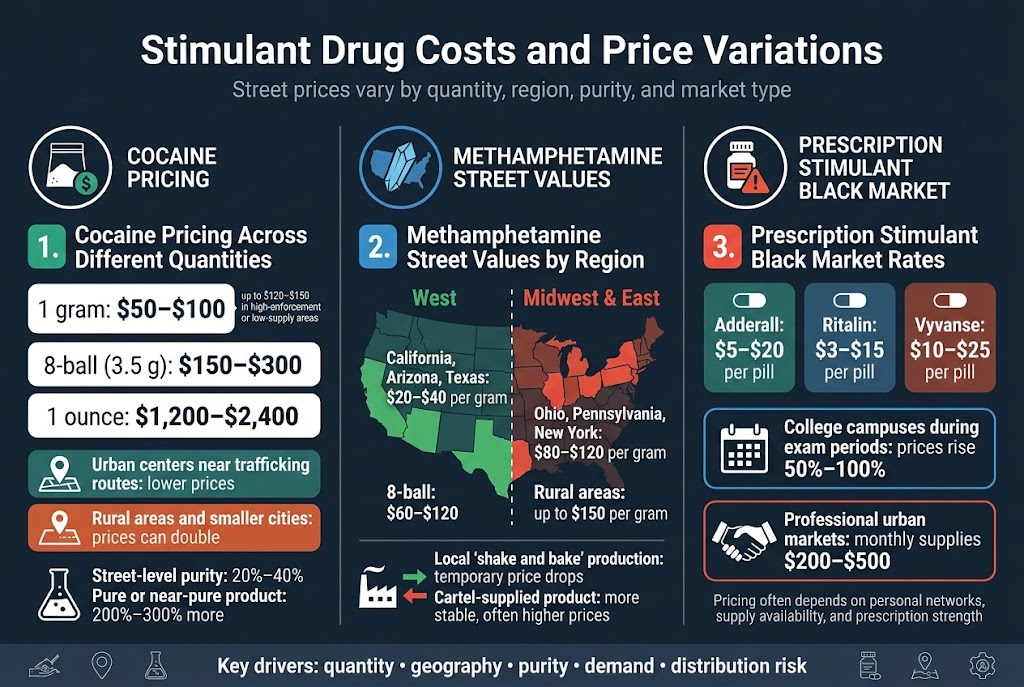
Cocaine represents one of the most expensive illegal drugs on the street market, with prices varying dramatically based on purchase quantity. A single gram typically costs between $50-$100 in most U.S. markets, though this can spike to $120-$150 in areas with limited supply or high enforcement activity. The drug’s pricing follows a predictable bulk discount structure – an eight-ball (3.5 grams) usually runs $150-$300, while an ounce can range from $1,200-$2,400 depending on purity and location.
Regional differences play a major role in cocaine street values. Urban centers near major trafficking routes like Miami, Los Angeles, and New York often see lower per-gram costs due to higher supply volumes. Rural areas and smaller cities face inflated prices, sometimes double the urban rates, due to transportation costs and increased distribution risks.
Purity significantly impacts pricing, with higher-grade cocaine commanding premium rates. Street-level cocaine typically contains 20-40% actual cocaine, diluted with various cutting agents. Pure or near-pure product can cost 200-300% more than standard street cocaine.
Methamphetamine Street Values by Region
Methamphetamine pricing shows remarkable regional variation across the United States, creating a complex geographic pricing map. Western states, particularly those along the Mexican border, typically see the lowest prices due to proximity to major production and smuggling operations. In states like California, Arizona, and Texas, a gram of methamphetamine ranges from $20-$40, while quantities like an eight-ball might cost $60-$120.
The Midwest and Eastern regions face significantly higher costs, with gram prices often reaching $80-$120. States like Ohio, Pennsylvania, and New York see elevated pricing due to increased transportation costs and law enforcement pressure on distribution networks. Rural areas within these regions can experience even steeper prices, sometimes approaching $150 per gram.
Production methods also influence regional pricing patterns. Areas with local small-scale production using the “shake and bake” method might see temporary price drops, while regions dependent on cartel-supplied product face more stable but potentially higher pricing structures.
Prescription Stimulant Black Market Rates
The illegal market for prescription stimulants has grown substantially, creating its own pricing ecosystem separate from traditional street drugs. Adderall, the most commonly diverted prescription stimulant, typically sells for $5-$20 per pill on college campuses, with prices varying based on dosage strength and local demand patterns.
Ritalin commands slightly lower prices, usually $3-$15 per pill, while newer medications like Vyvanse can reach $10-$25 per pill due to their extended-release formulations and perceived higher value. College environments often see the highest prices during exam periods, with demand spikes driving costs up by 50-100%.
Professional urban markets show different pricing patterns, with monthly supplies sometimes traded for $200-$500 depending on prescription strength and quantity. The prescription stimulant black market operates differently from traditional drug markets, often involving personal networks rather than street-level dealers, which can create more volatile pricing based on relationship dynamics and supply availability.
Depressant and Opioid Market Pricing
Heroin Cost Analysis and Purity Considerations
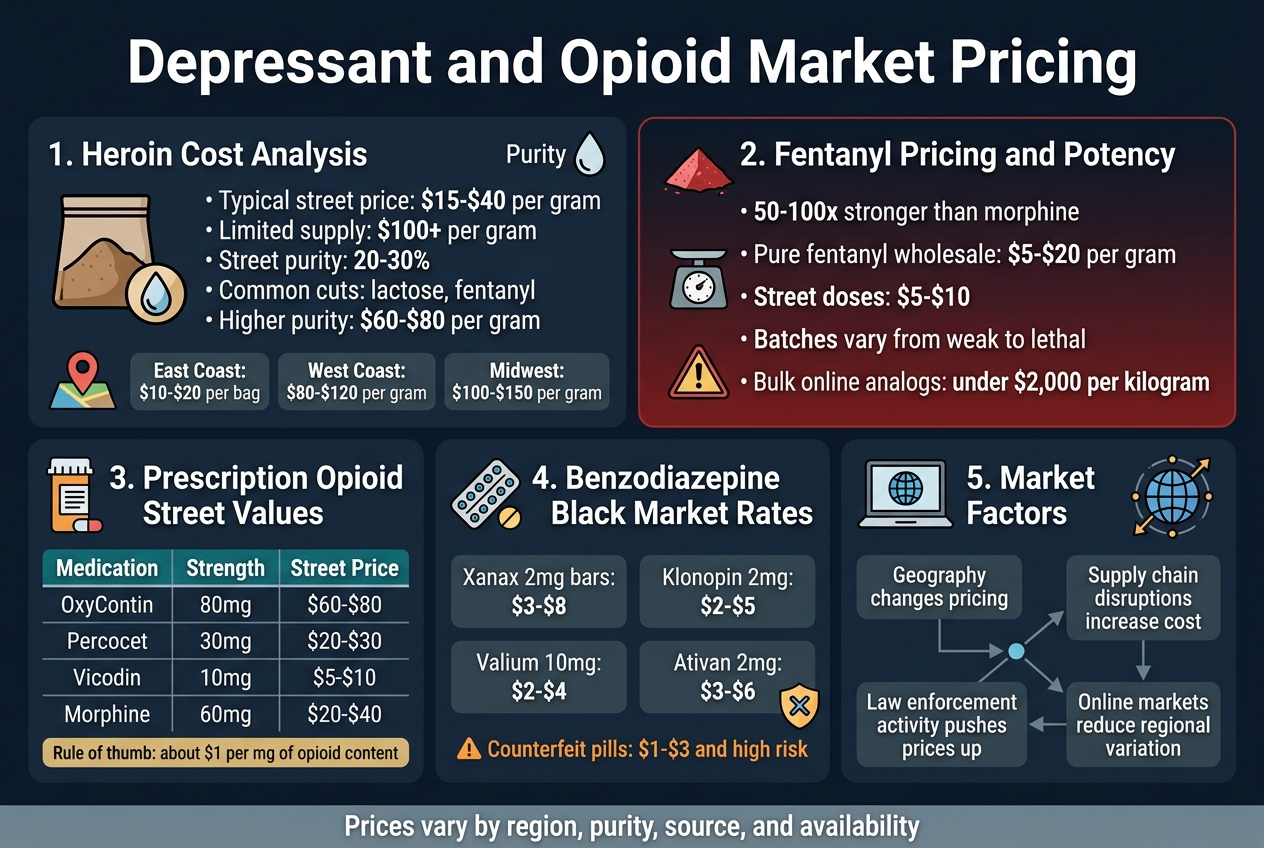
Heroin street prices fluctuate dramatically based on geographic location, supply chain disruptions, and local law enforcement activity. A single gram typically ranges from $15 to $40 in most U.S. markets, though prices can spike to $100 or more in areas with limited supply. The illegal drug prices for heroin reflect both its addictive nature and the risks involved in distribution.
Purity levels play a crucial role in determining actual value. Street heroin often contains only 20-30% pure substance, diluted with everything from lactose to dangerous fillers like fentanyl. Higher purity heroin commands premium pricing, sometimes reaching $60-80 per gram in markets where quality is scarce.
Regional variations show significant patterns:
-
East Coast markets typically see brown powder heroin at $10-20 per bag (0.1 gram)
-
West Coast black tar heroin averages $80-120 per gram
-
Midwest markets fall somewhere between, with prices around $100-150 per gram
Fentanyl Pricing and Potency Factors
Fentanyl has revolutionized street drug costs due to its extreme potency – roughly 50-100 times stronger than morphine. This potency means dealers can stretch supplies much further, affecting overall market economics. Pure fentanyl sells for $5-20 per gram at wholesale levels, but street-level distribution involves heavy cutting.
Individual doses often cost $5-10, similar to heroin, but the danger lies in inconsistent mixing. Some batches contain lethal concentrations while others barely register effects. The unpredictability has created a volatile pricing structure where reputation and trusted sources command higher prices.
Chinese-manufactured fentanyl analogs flood markets at extremely low costs, sometimes under $2,000 per kilogram when purchased in bulk online. This has disrupted traditional drug market pricing across North America, making synthetic opioids accessible to lower-level dealers who previously couldn’t afford wholesale heroin purchases.
Prescription Opioid Street Values
Prescription opioids maintain consistent pricing based on milligram strength and pharmaceutical brand recognition. Popular pills follow these typical street patterns:
| Medication | Strength | Street Price |
|---|---|---|
| OxyContin | 80mg | $60-80 |
| Percocet | 30mg | $20-30 |
| Vicodin | 10mg | $5-10 |
| Morphine | 60mg | $20-40 |
The “dollar per milligram” rule often applies, where each milligram of opioid content costs approximately $1 on the street. Extended-release formulations typically cost more due to higher total drug content, even though crushing defeats the time-release mechanism.
Geographic factors significantly impact prescription drug availability and pricing. Areas with higher elderly populations or more pain management clinics often see lower street prices due to increased supply from diverted medications.
Benzodiazepine Black Market Rates
Benzodiazepines maintain steady demand in underground drug markets, particularly among users seeking to enhance other substances or manage withdrawal symptoms. Xanax (alprazolam) dominates this market segment, with 2mg bars selling for $3-8 each depending on regional availability.
Common benzodiazepine street pricing includes:
-
Xanax 2mg bars: $3-8 per pill
-
Klonopin 2mg: $2-5 per pill
-
Valium 10mg: $2-4 per pill
-
Ativan 2mg: $3-6 per pill
Counterfeit benzodiazepines have flooded markets, often containing fentanyl or other dangerous substances. These fakes typically sell at lower prices ($1-3 per pill) but carry extreme risks. Authentic pharmaceutical benzodiazepines command higher prices due to predictable effects and safety profiles.
The rise of online markets has stabilized benzodiazepine pricing nationally, as buyers can source from multiple regions. This connectivity has reduced the extreme price variations once common in isolated markets.
Cannabis and Psychedelic Substance Costs
Marijuana Pricing by Quality and Legality Status
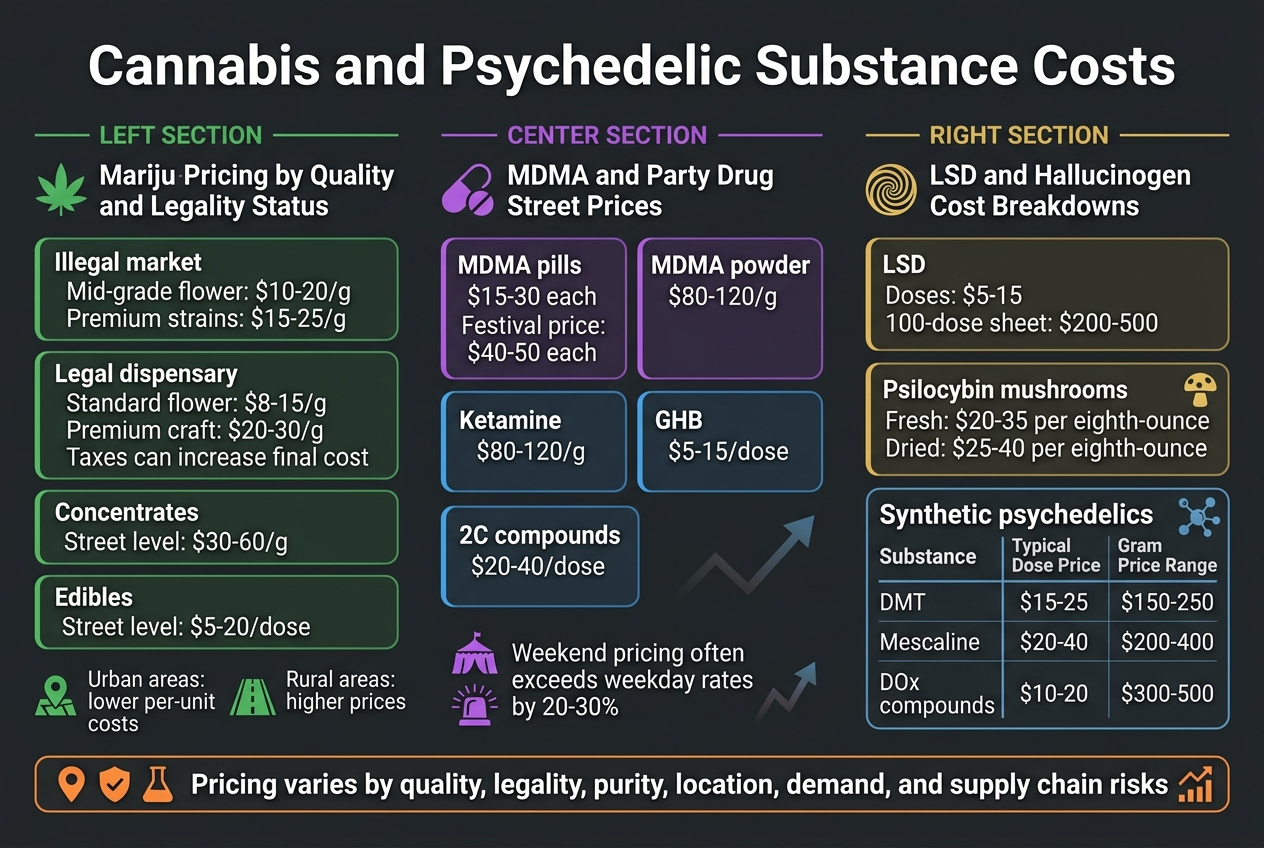
Street drug costs for cannabis vary dramatically based on quality, location, and legal status. In states without legalization, marijuana typically sells for $10-20 per gram for mid-grade flower, while premium strains command $15-25 per gram. These illegal drug prices reflect the risks dealers face and the lack of regulated competition.
Legal cannabis markets have shifted pricing structures significantly. Dispensary prices range from $8-15 per gram for standard flower, though taxes can push final costs higher than street prices. Premium craft cannabis in legal markets often sells for $20-30 per gram, competing directly with high-end black market products.
Concentrates and edibles follow different pricing models. Street-level cannabis concentrates typically cost $30-60 per gram, while edibles vary from $5-20 per dose depending on potency and production quality.
Regional differences create substantial price gaps. Urban areas with established distribution networks generally offer lower per-unit costs, while rural locations see inflated prices due to transportation risks and limited supply chains.
MDMA and Party Drug Street Prices
MDMA represents one of the most volatile segments of drug market pricing. Single pills typically sell for $15-30 each, though prices fluctuate based on purity, branding, and event proximity. Music festivals and party scenes often see price spikes to $40-50 per pill due to increased demand and venue security risks.
Powder MDMA commands different rates, usually $80-120 per gram at street level. This pricing reflects the substance’s reputation for higher purity compared to pressed pills, though actual quality varies significantly across suppliers.
Other party drugs show distinct pricing patterns:
-
Ketamine: $80-120 per gram
-
GHB: $5-15 per dose
-
2C compounds: $20-40 per dose
Festival and club environments create temporary price inflation, with dealers capitalizing on concentrated demand and limited competition. Weekend pricing often exceeds weekday rates by 20-30% in active nightlife areas.
LSD and Hallucinogen Cost Breakdowns
LSD maintains relatively stable illicit substance prices due to its potency and storage efficiency. Individual doses typically range from $5-15, with bulk purchases reducing per-unit costs significantly. Sheet purchases (100 doses) often price at $200-500, depending on supplier relationships and quality claims.
Psilocybin mushrooms show seasonal price variations reflecting cultivation cycles. Fresh mushrooms typically sell for $20-35 per eighth-ounce, while dried varieties command $25-40 for equivalent amounts. Home cultivation has impacted local markets, creating price pressure in areas with established growing communities.
Synthetic psychedelics follow different economic models:
| Substance | Typical Dose Price | Gram Price Range |
|---|---|---|
| DMT | $15-25 per dose | $150-250 |
| Mescaline | $20-40 per dose | $200-400 |
| DOx compounds | $10-20 per dose | $300-500 |
Underground drug costs for psychedelics often reflect the specialized knowledge required for production and the relatively small user base compared to mainstream substances. This creates higher per-unit costs but also more stable pricing due to limited competition and consistent demand from experienced users.
Research chemical markets have introduced pricing competition for traditional psychedelics, with novel compounds often priced lower to gain market acceptance before potential scheduling actions increase risks and costs.
Economic Impact of Street Drug Purchases
Daily Addiction Costs for Common Substances
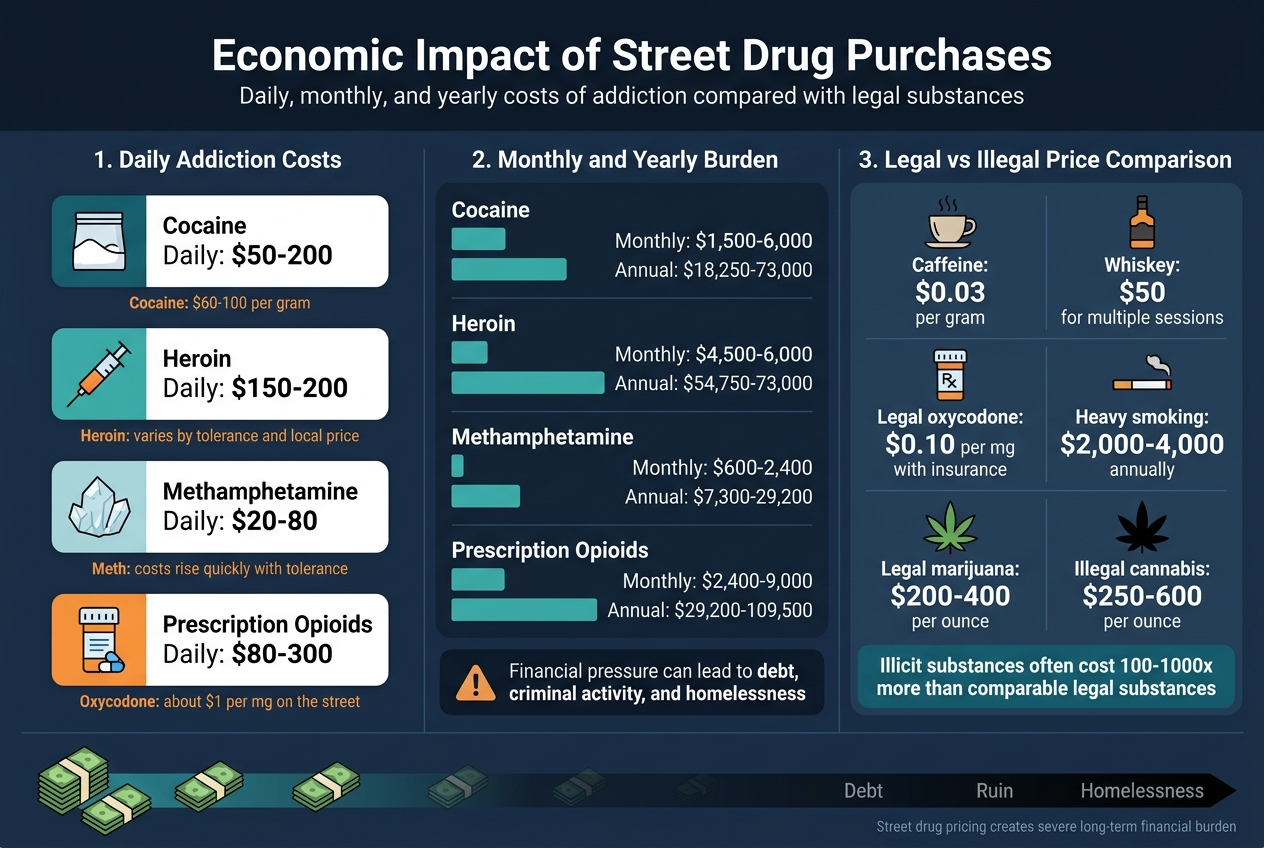
The financial reality of drug addiction hits hard when you break down the numbers daily. Cocaine users typically spend between $50-200 per day to maintain their habit, with heavy users consuming multiple grams at average street drug costs of $60-100 per gram. Heroin addiction creates equally devastating financial demands, with users spending $150-200 daily on average, though this varies significantly based on tolerance levels and local illegal drug prices.
Methamphetamine presents a different cost structure, with users spending approximately $20-80 daily, making it one of the more “affordable” addictions initially. However, the rapid tolerance buildup means these costs escalate quickly. Prescription opioids like oxycodone command premium prices on the street drug market, often $1 per milligram, leading to daily expenses of $80-300 for dependent users.
These daily costs create a relentless financial pressure that drives many users to criminal activity, debt accumulation, and complete financial ruin within months of developing dependency.
Monthly and Yearly Financial Burden Calculations
Monthly calculations reveal the staggering scope of addiction’s financial impact. A moderate cocaine habit translates to $2,100-4,200 monthly, while severe addictions can exceed $6,000. Annual costs for cocaine dependency range from $25,200 to over $72,000, representing more than many people’s entire yearly income.
Heroin users face monthly expenses of $4,500-6,000 on average, creating annual financial burdens between $54,000-73,000. These narcotic pricing data points demonstrate why addiction quickly depletes savings, retirement accounts, and leads to massive debt accumulation.
| Substance | Daily Cost Range | Monthly Cost | Annual Cost |
|---|---|---|---|
| Cocaine | $50-200 | $1,500-6,000 | $18,250-73,000 |
| Heroin | $150-200 | $4,500-6,000 | $54,750-73,000 |
| Methamphetamine | $20-80 | $600-2,400 | $7,300-29,200 |
| Prescription Opioids | $80-300 | $2,400-9,000 | $29,200-109,500 |
The underground drug costs create financial obligations that exceed most people’s housing expenses, often leading to homelessness as users prioritize substance purchases over basic needs.
Comparison to Legal Substance Prices
The price differential between illegal and legal substances reveals the massive markup created by prohibition and risk factors. A gram of pure caffeine costs approximately $0.03 legally, while a gram of cocaine sells for 2,000-3,000 times that amount on illicit substance markets.
Alcohol provides another stark comparison – a bottle of high-quality whiskey might cost $50 and provide multiple drinking sessions, while the same $50 buys less than one gram of cocaine for a single night’s use. Prescription medications demonstrate similar disparities; legal oxycodone might cost $0.10 per milligram with insurance, but street versions command $1 per milligram or more.
Tobacco represents perhaps the closest legal comparison to drug addiction costs. Heavy smokers spend $2,000-4,000 annually on cigarettes, which seems modest compared to illegal drug economics. Even medical marijuana in legal states costs significantly less than black market cannabis, typically $200-400 per ounce compared to $250-600 for illegal varieties.
The drug market pricing structure reflects the enormous premiums users pay for illegal substances, with risk, transportation costs, and multiple dealer markups creating prices that are often 100-1000 times higher than comparable legal substances.
Price Trends and Market Intelligence
Historical Pricing Data and Inflation Effects
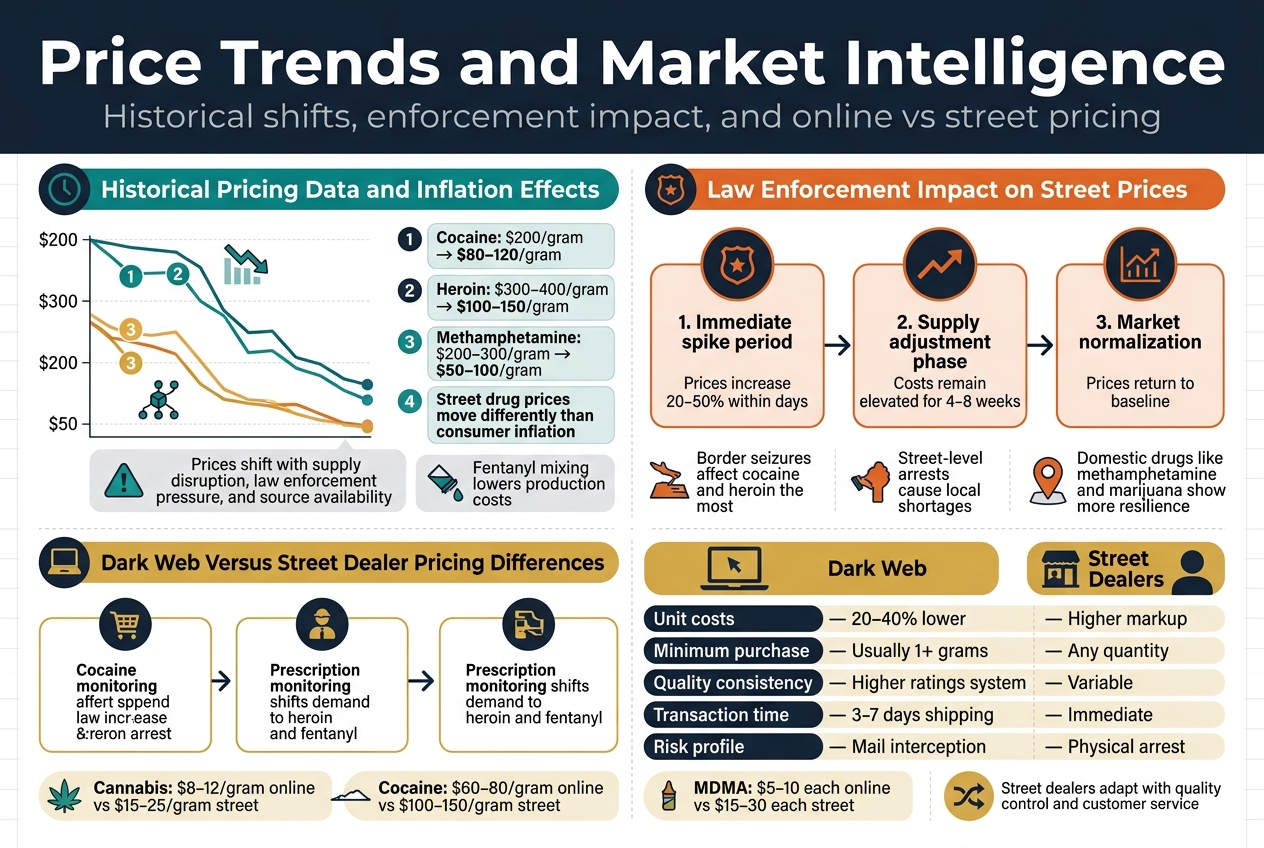
Drug market pricing has experienced dramatic shifts over the past few decades, with some substances becoming significantly cheaper while others have maintained or increased their street value. Cocaine prices, for example, have generally declined since the 1980s peak, with average street prices dropping from around $200 per gram to approximately $80-120 per gram in most major cities. This reduction reflects increased supply chains and competition among distributors.
Heroin pricing tells a different story. The substance has become increasingly affordable, with average costs dropping from $300-400 per gram in the 1990s to roughly $100-150 per gram today. This dramatic price reduction coincided with the opioid crisis expansion and increased fentanyl availability, which often gets mixed with heroin to reduce production costs.
Inflation affects illegal drug prices differently than legal goods. While most consumer products experience steady price increases, street drug costs often move independently of economic indicators. The underground economy operates on supply disruption, law enforcement pressure, and source availability rather than traditional market forces.
Methamphetamine represents one of the most striking examples of deflation in drug markets. Prices have plummeted from approximately $200-300 per gram in the early 2000s to around $50-100 per gram currently, primarily due to increased domestic production and Mexican cartel involvement in distribution networks.
Law Enforcement Impact on Street Prices
Law enforcement activities create immediate and measurable effects on street drug costs across all markets. Major busts and trafficking interdictions typically cause temporary price spikes lasting several weeks to months as suppliers adjust their operations and rebuild distribution networks.
The relationship between enforcement and pricing follows predictable patterns:
-
Immediate spike period: Prices increase 20-50% within days of major enforcement actions
-
Supply adjustment phase: Costs remain elevated for 4-8 weeks as new distribution channels establish
-
Market normalization: Prices gradually return to baseline levels as operations resume
Border seizures particularly impact cocaine and heroin markets, since these substances require international smuggling operations. A single large seizure can affect regional pricing for months, while domestic drugs like methamphetamine and marijuana show more resilience to enforcement disruption.
Street-level arrests have different effects than high-level trafficking busts. Removing street dealers creates temporary local shortages but rarely affects wholesale pricing or long-term market dynamics. Users simply shift to alternative dealers or geographic areas until normal operations resume.
Prescription drug enforcement has created unique pricing dynamics. Opioid prescription monitoring programs have driven many users toward cheaper street alternatives like heroin and fentanyl, actually reducing demand for expensive prescription pills while increasing demand for lower-cost illegal substitutes.
Dark Web Versus Street Dealer Pricing Differences
Online drug markets operate with fundamentally different pricing structures compared to traditional street-level transactions. Dark web marketplaces typically offer lower per-unit costs but require larger minimum purchases and involve shipping risks that street deals avoid.
Pricing Comparison Factors:
| Factor | Dark Web | Street Dealers |
|---|---|---|
| Unit costs | 20-40% lower | Higher markup |
| Minimum purchase | Usually 1+ grams | Any quantity |
| Quality consistency | Higher ratings system | Variable |
| Transaction time | 3-7 days shipping | Immediate |
| Risk profile | Mail interception | Physical arrest |
Cannabis pricing shows the most dramatic differences between platforms. Dark web vendors often sell high-quality cannabis at $8-12 per gram, while street prices range from $15-25 per gram in most areas. This gap reflects reduced overhead costs for online vendors who eliminate multiple distribution layers.
Stimulant drugs like cocaine and MDMA also demonstrate significant price advantages online. Dark web cocaine averages $60-80 per gram compared to street prices of $100-150 per gram. MDMA tablets cost $5-10 each online versus $15-30 each through traditional dealers.
However, street purchases offer advantages that justify higher costs for many buyers. Immediate availability, smaller quantity options, and established dealer relationships provide value that online markets cannot match. Street dealers also offer credit arrangements and personal service that anonymous online vendors cannot provide.
The pricing gap between platforms has influenced overall market dynamics, with some traditional dealers adapting their business models to compete with online alternatives through improved quality control and customer service approaches.
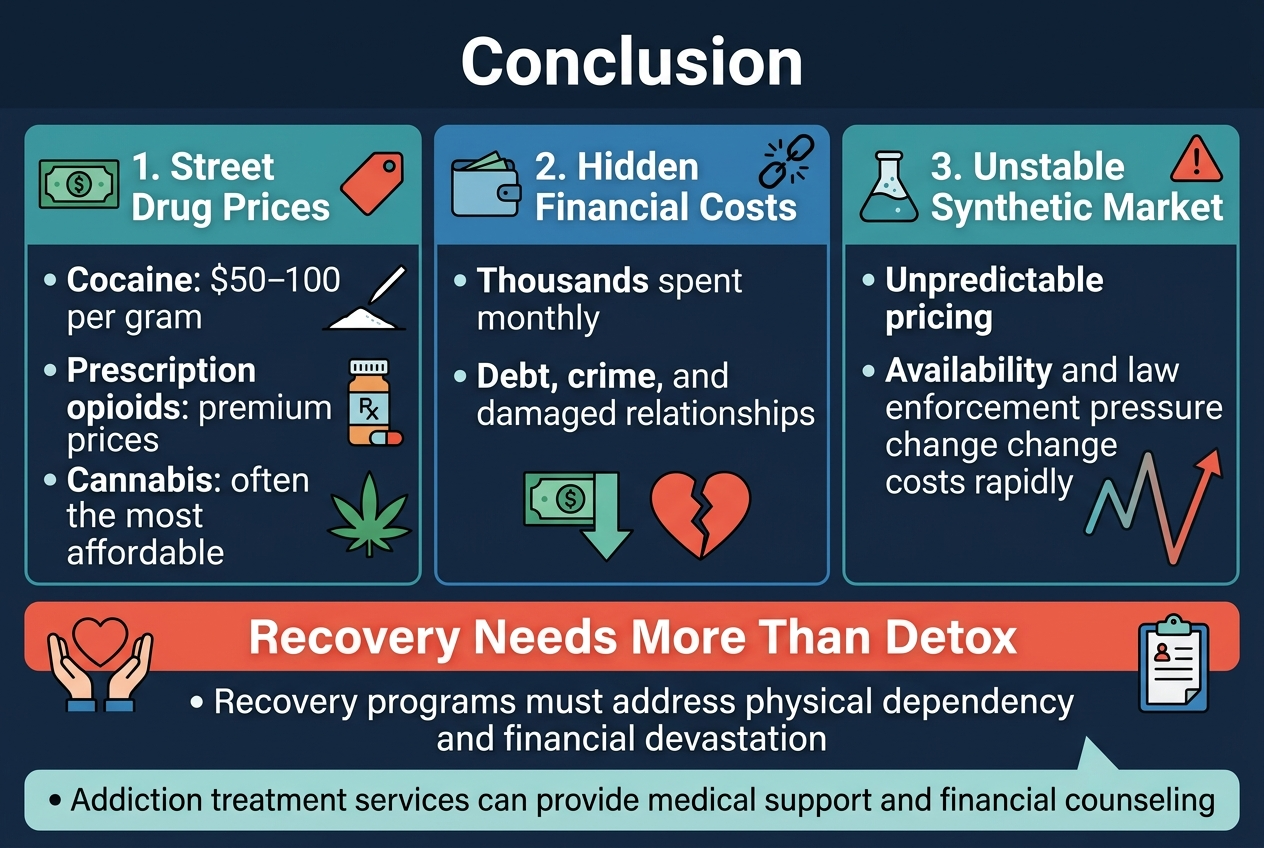
Drug prices on the street reflect a complex web of supply chains, risk factors, and market demands that directly impact users and communities. From stimulants like cocaine averaging $50-100 per gram to prescription opioids commanding premium prices, these costs drain significant money from individuals while fueling criminal enterprises. Cannabis remains the most affordable option in many areas, while synthetic drugs show unpredictable pricing patterns that change rapidly with availability and law enforcement pressure.
The financial burden extends far beyond the immediate purchase price. People struggling with addiction often spend thousands monthly on substances, leading to debt, crime, and destroyed relationships. Understanding these economic realities helps explain why addiction recovery programs must address both the physical dependency and the financial devastation that accompanies drug use. If you or someone you know is facing these challenges, reaching out to addiction treatment services can provide both medical support and financial counseling to break the costly cycle of substance dependency.


This breakdown of street drug pricing really highlights how complex and dangerous the underground drug economy is. It’s eye-opening to see how much markup dealers add just to cover risks like law enforcement crackdowns and violence. Understanding these dynamics helps explain why addiction often becomes a cycle that’s so hard to break, both financially and socially. Thanks for shedding light on this critical issue.